
Community
Open-source Zeptocore things in the wild
A collection of homemade Zeptocores and open-source relatives. You will find modular versions and visualizers, plus tools for managing samples. There are even possible future ports.
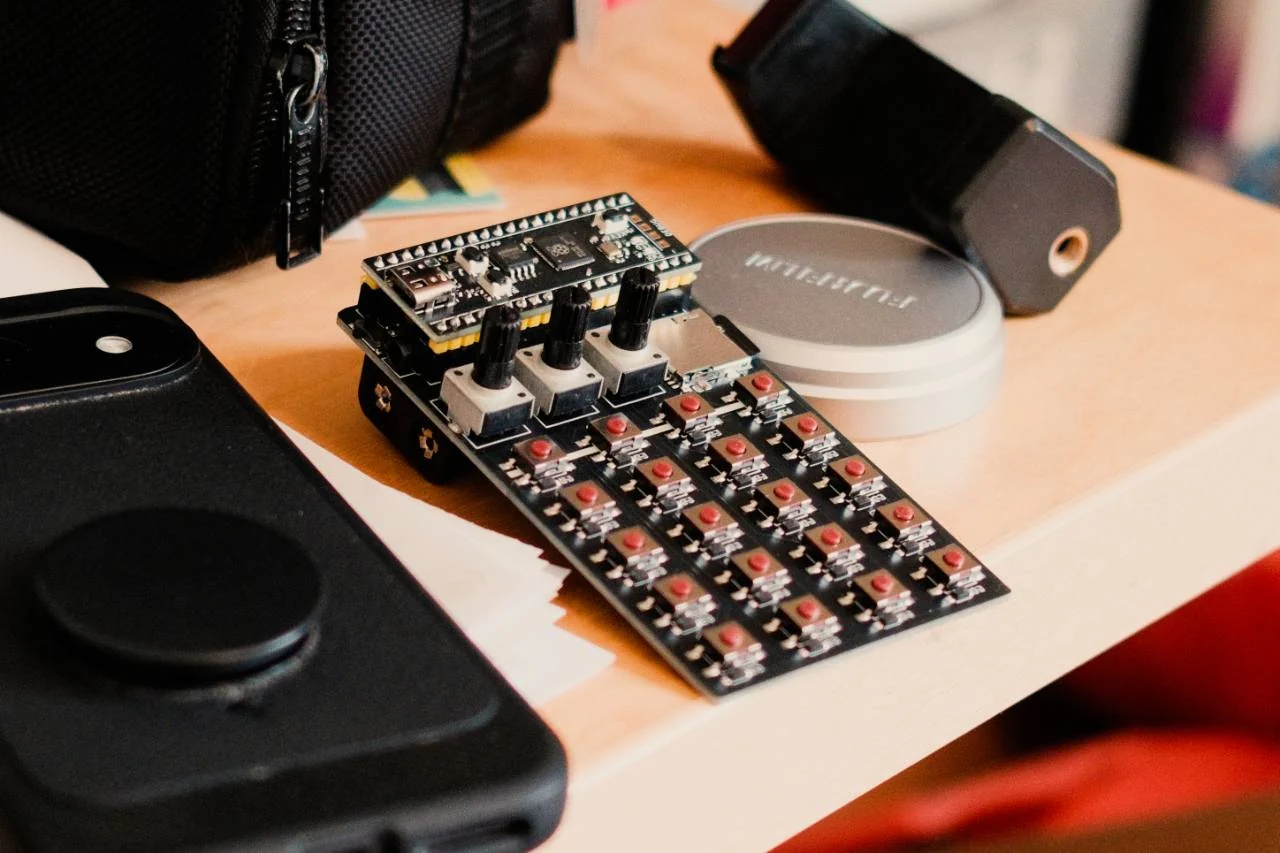
When I released the Zeptocore in 2024, I also released its firmware and schematic along with the tools I used to make it. I hoped people would build on it, but I did not know what that would look like.
I found a breadboard and several homemade kits. There was also an arcade box and a Russian sampler. I found enormous Eurorack panels alongside a Max visualizer. One maker designed a 3D-printed case, and another machine is still being beta tested.
I tried to collect the Zeptocore things I could find and trace each one back to its maker. Some are complete open-source projects. Some are commercial instruments using the open firmware. Others are personal builds with a video and not much else. I have tried to say which is which. A working machine is useful evidence, but it is not the same thing as a reproducible set of build files. A porting plan is something else again.
where it starts
zeptocore.com has the manual, firmware, sample tool, and information about the original handheld. The schollz/_core repository contains the firmware, DSP code, documentation, and build targets for Zeptocore, Zeptoboard, Ectocore, and EZEPTOCORE. The current Zeptocore schematic is here.
The Zeptocore plays 16-bit stereo audio at 44.1 kHz and reads samples from an SD card. It can use 16 banks of 16 samples, has 16 effects, a real-time sequencer, a single-cycle wavetable bass synthesizer, and MIDI over USB. The firmware is GPLv3 and the hardware is CC BY-SA 3.0.
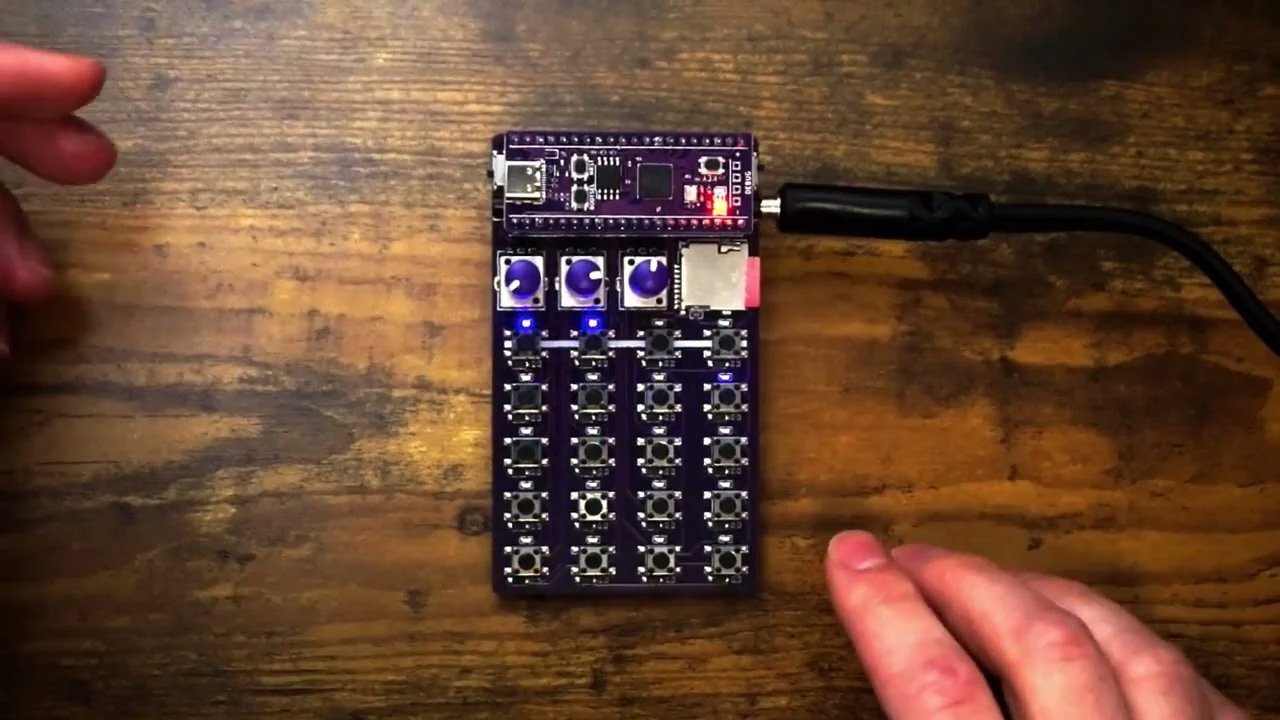
If you want one without soldering, there is the finished Zeptocore. If you want to build it yourself, there is also the DIY Zeptocore.
the zeptoboard
Before the finished hardware, there was a breadboard. I got the first version working with a WeAct-style Pico, a PCM5102 audio board, and an SDIO breakout. I still support this version and call it the Zeptoboard.
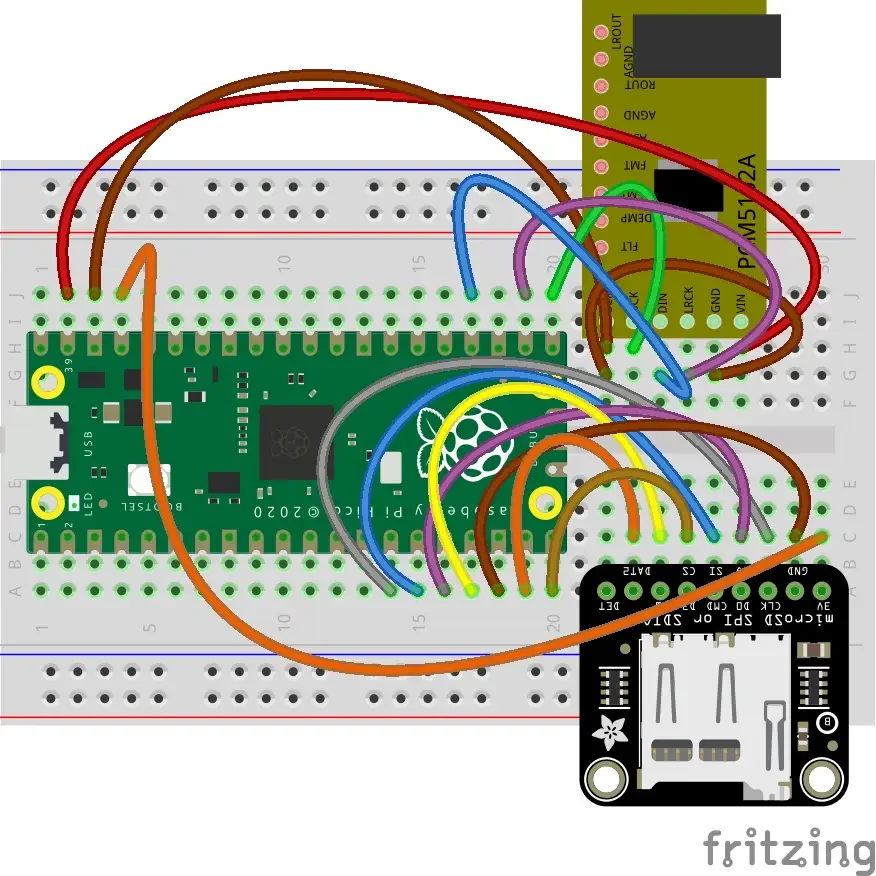
Zeptoboard has most of the same functionality as Zeptocore, but it can use a computer keyboard and the browser MIDI interface instead of the handheld keypad. It is a good place to start if you want to experiment with the firmware because every wire is visible and every component can be replaced without ordering another PCB.
It is also a reminder that the device did not begin as a polished purple rectangle. It began as a lot of wires on a breadboard (I built the first one on a flight from Seattle to Berlin, and somehow nobody asked about it).
homemade zeptocores
Floyd Steinberg made a video with the excellent title “Zeptocore, a DIY live looping sampler (and how I failed assembling it)”. He had assembled the kit incorrectly and put it away for a while. Later, he came back to repair it. The video begins with the kit and the original mistake. It follows the troubleshooting through to the working instrument at the end.
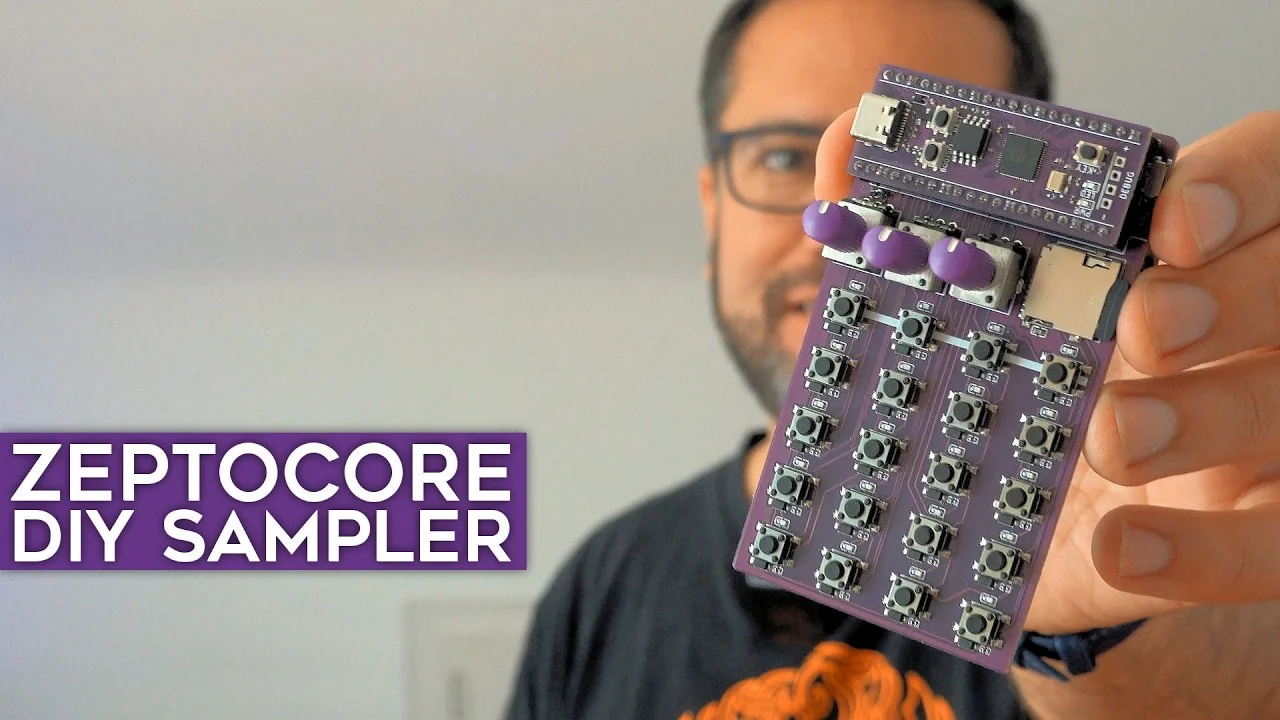
I like build videos that leave the mistakes in. Most hardware does not work perfectly on the first attempt. My first Zeptocore board took many revisions, including about fifteen that did not work at all, so Floyd's experience is much closer to hardware development than a perfect ten-minute montage.
Pilkafa had a much easier time in “Building Zeptocore”. The assembly is short and the rest of the video is a play test at the workbench. Between these two videos you get a fair idea of building the kit, including both the easy soldering and the troubleshooting that can happen when something goes wrong.
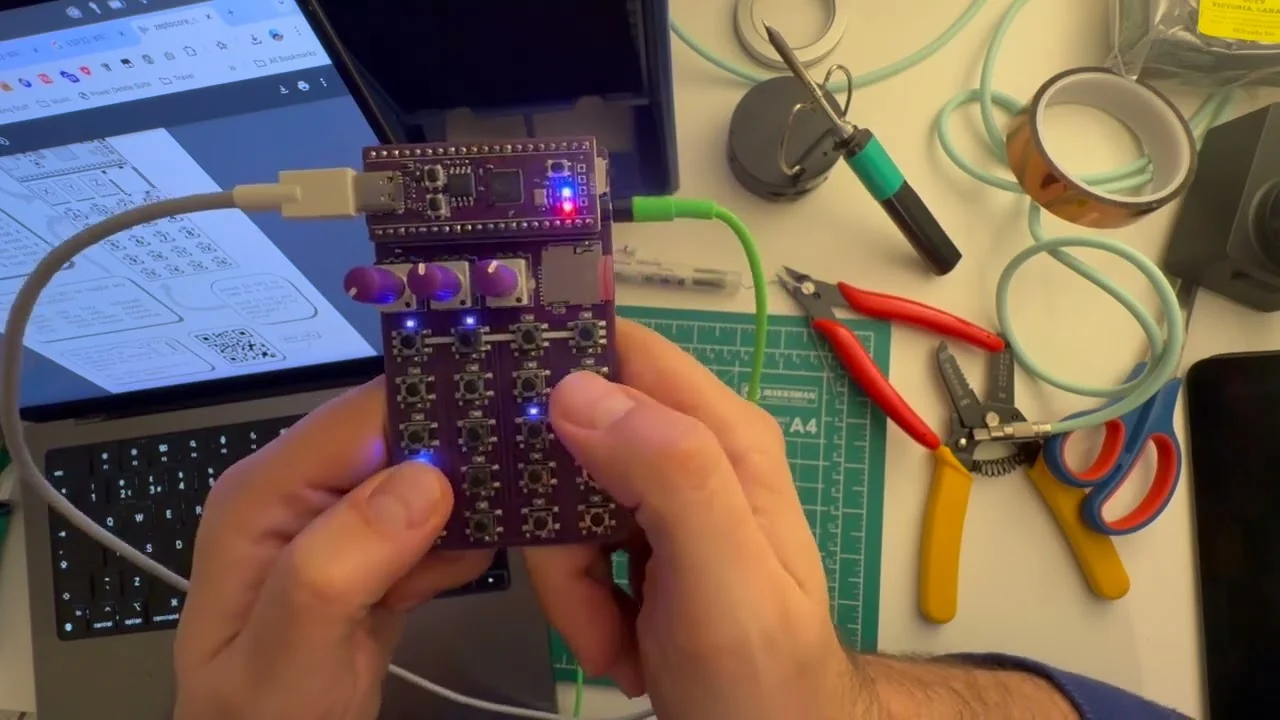
AudioWanderer made a free 3D-printable case for the DIY board. The accompanying video combines the cased Zeptocore with a Mini Kaoss Pad for a very glitchy portable setup.
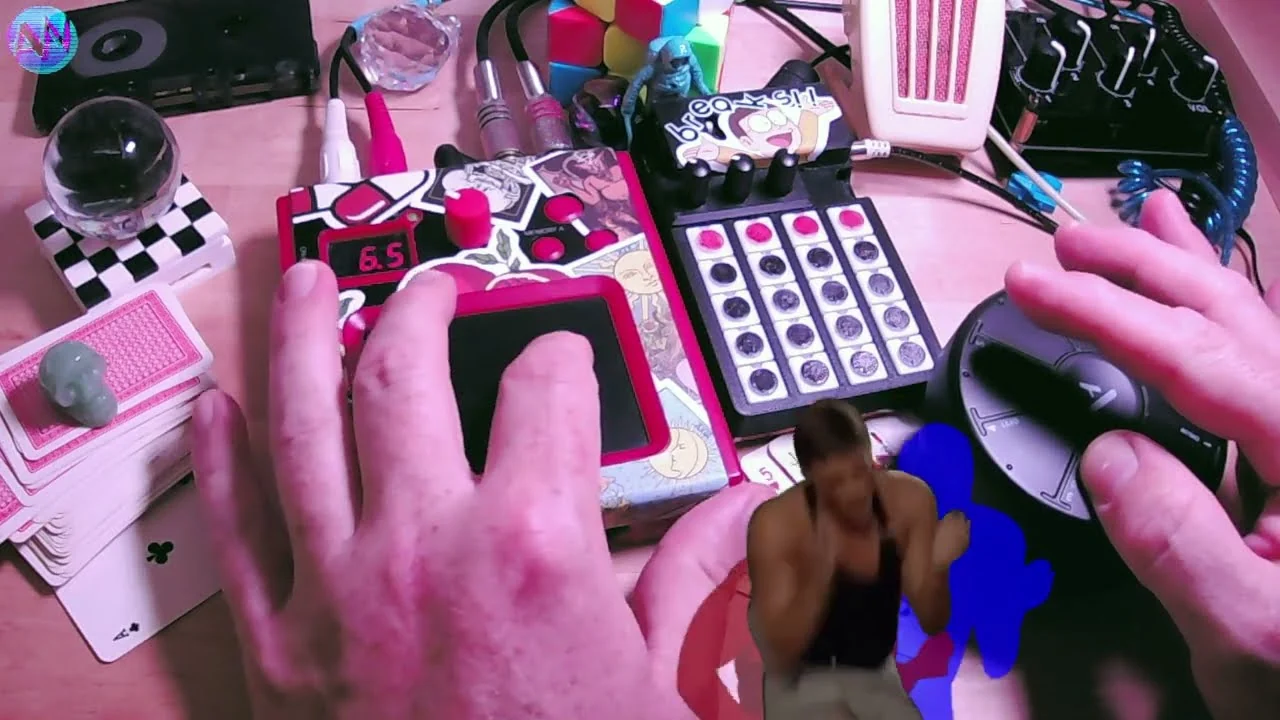
This one does not change the circuit or firmware, but the case turns an exposed board into something that can survive being put in a bag. Enclosures are often the part of DIY hardware that takes the longest to finish, at least in my experience.
the zeptocade
I made the Zeptocade because I wanted to play Zeptocore with very large buttons. It holds a normal Zeptocore inside an arcade box and brings the controls out to twenty illuminated arcade buttons and eleven knobs. It is much less portable, but it is very fun to play.
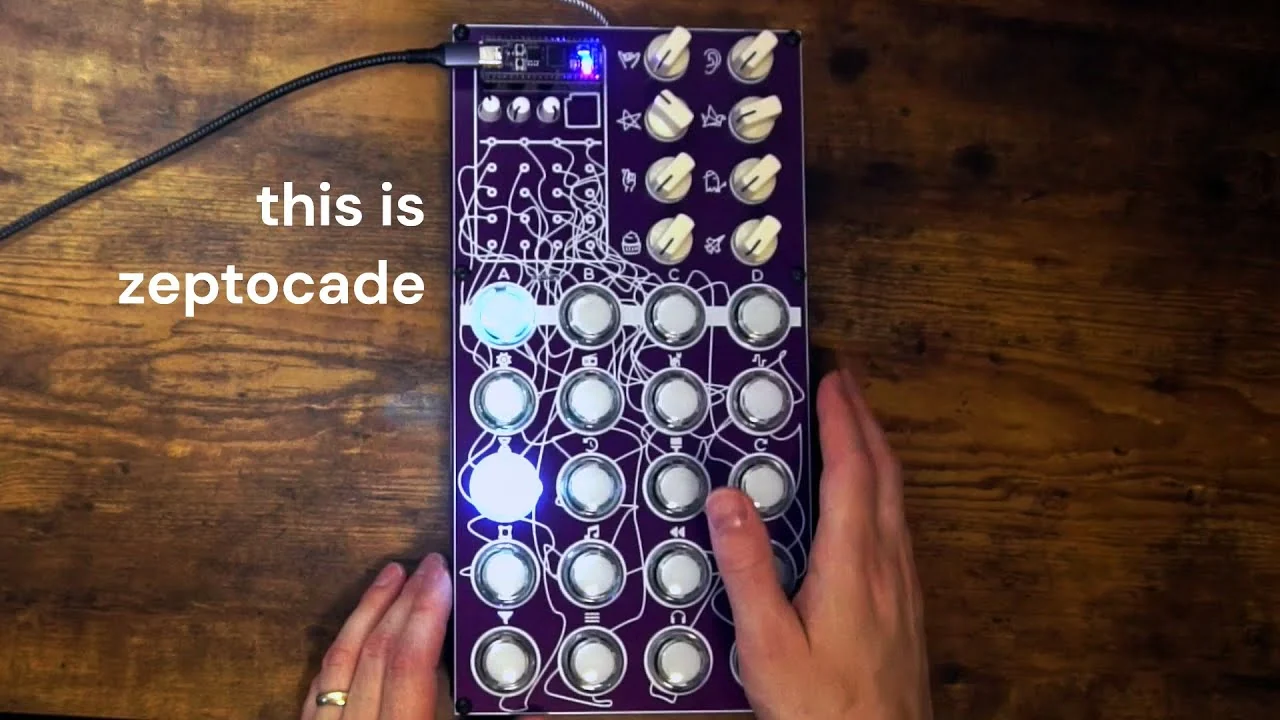
I no longer manufacture the Zeptocade, so I released the BOM, Gerbers, schematic, source, and DIY guide. The original Zeptocore can be removed from the case and used normally, which means the large interface does not permanently consume the handheld.
BeepBoop4Days designed a 3D-printable case for the Zeptocade. The headphone jack was difficult to reach, and the first idea was to make a panel for some better positioned jacks. The design kept going until there were printable panels around the whole instrument.
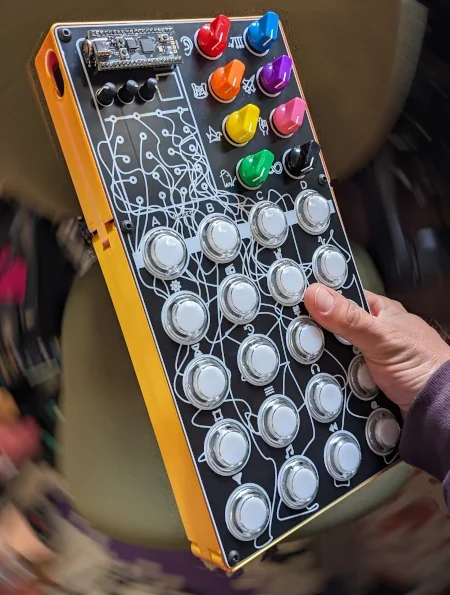
The case adds two mono jacks and one stereo jack. The repository includes STEP and STL files, wiring directions, a BOM, and useful notes about printing it on a small FDM printer.
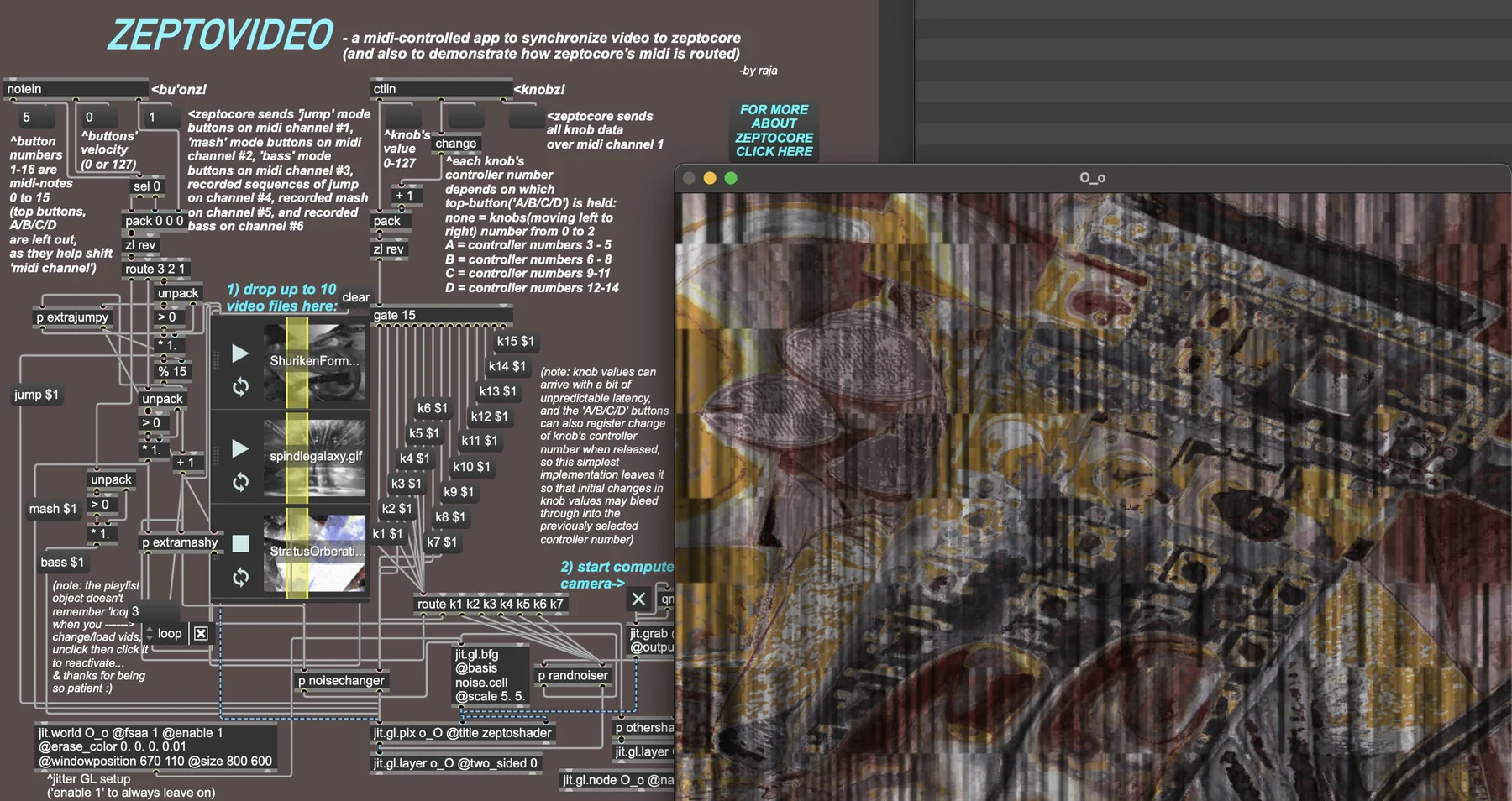
There is also Zeptovideo by ItWasAlienz. It is a Max patch that takes MIDI from the Zeptocore and uses it to control Jitter shaders, including the motionglitch shader included with Max. Now the arcade buttons can glitch the picture as well as the audio.
sampo
SynthCone made SAMPO, a Zeptocore-based sampler in a narrow white case with a screen and directional buttons. The SAMPO overview shows the finished hardware and goes through the main functions.
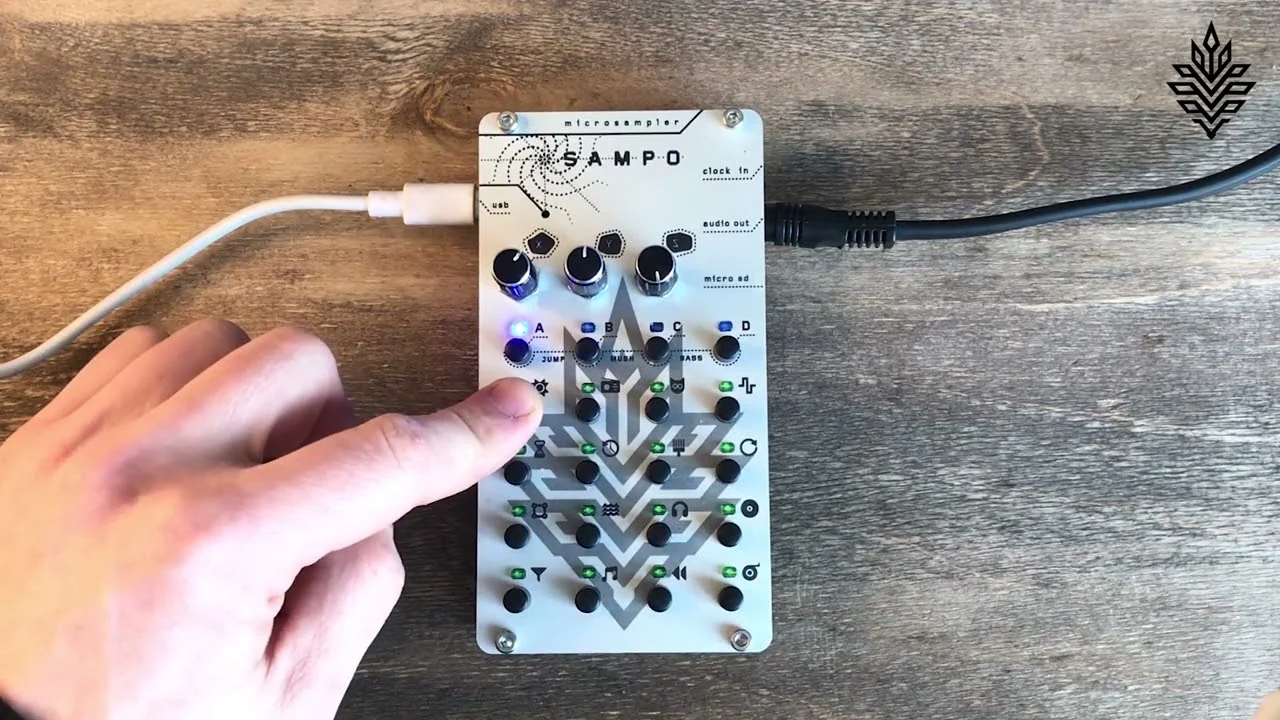
SAMPO has been described as an open-source Zeptocore clone, though I could not find a public hardware archive as complete as the one for Zeptocade. There are videos showing a real working machine, so I am including it here while being careful about what is currently available to reproduce.
There is a very substantial companion program by ksburaya called Sampo Sample Manager. It is a local Flask application that indexes samples into SQLite and analyzes their BPM, key, category, and spectral features. You can audition related sounds and export a collection for SAMPO or Zeptocore.
Sample management is not the glamorous part of making a sampler, but it becomes important as soon as your collection gets large. The official Zeptocore tool prepares files and banks. Sampo Sample Manager adds a searchable library around that process.
zeptocore in a modular rack
The _core repository includes the discontinued Ectocore target and the current EZEPTOCORE firmware developed with Maneco Labs. These are Eurorack descendants of the handheld Zeptocore.
Infinite Digits x Maneco Labs' ZeptoMod is another modular version. The 18 HP Eurorack module gives the controls more room and adds the power and connections needed in a rack. Maneco also made a 5U ZeptoMod, plus the larger ZeptoMod Plus and ZeptoMod Mega.
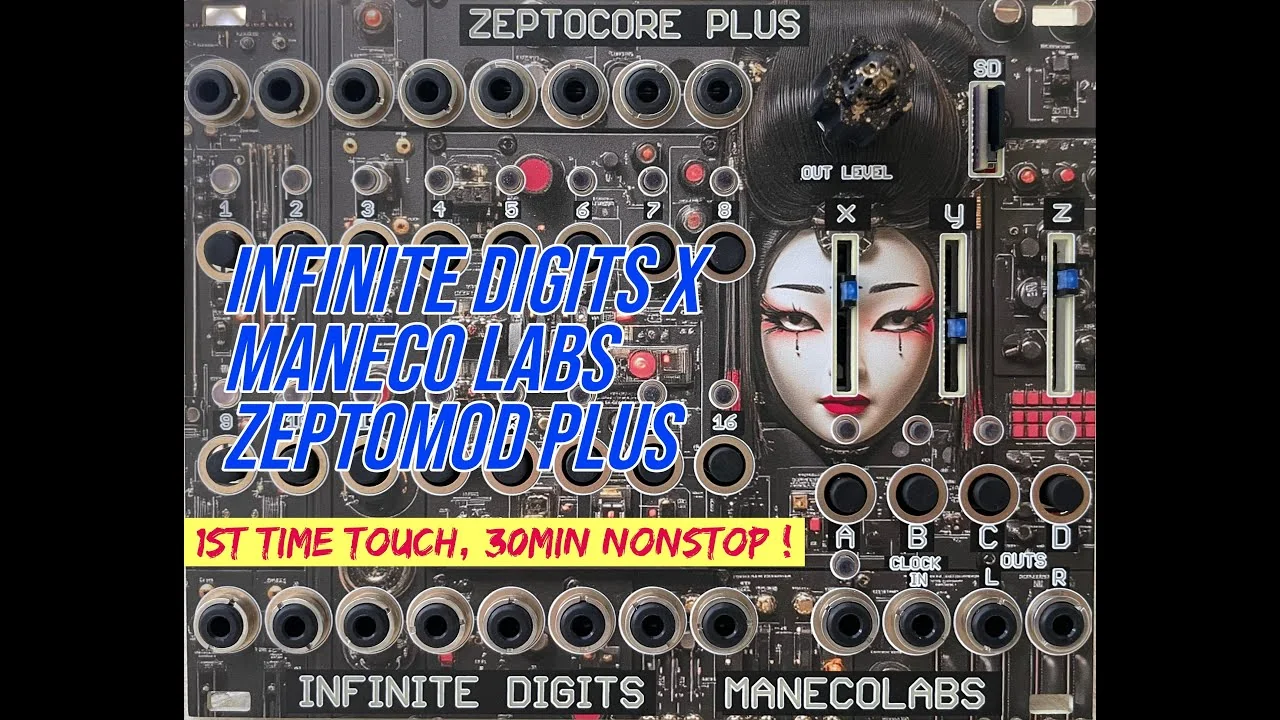
tokiony's ZeptoMod Plus video is a half-hour first encounter with the module. Watching it makes the reason for a large Zeptocore obvious. Parameters that require combinations on the handheld can have their own knobs and patch points in a rack.
These are commercial modules rather than home builds, but they use the open Zeptocore work and belong in the same collection. Open-source hardware can lead to a free breadboard design or a personal clone. It can also become a manufactured instrument. There is room for every version.
zeptomech
Zeptomech is an upcoming Infinite Digits device that is still in beta. The best public look I found is EchoEs Bats' “Beta Testing Zeptomech!”, which shows a working beta unit in a larger music setup.
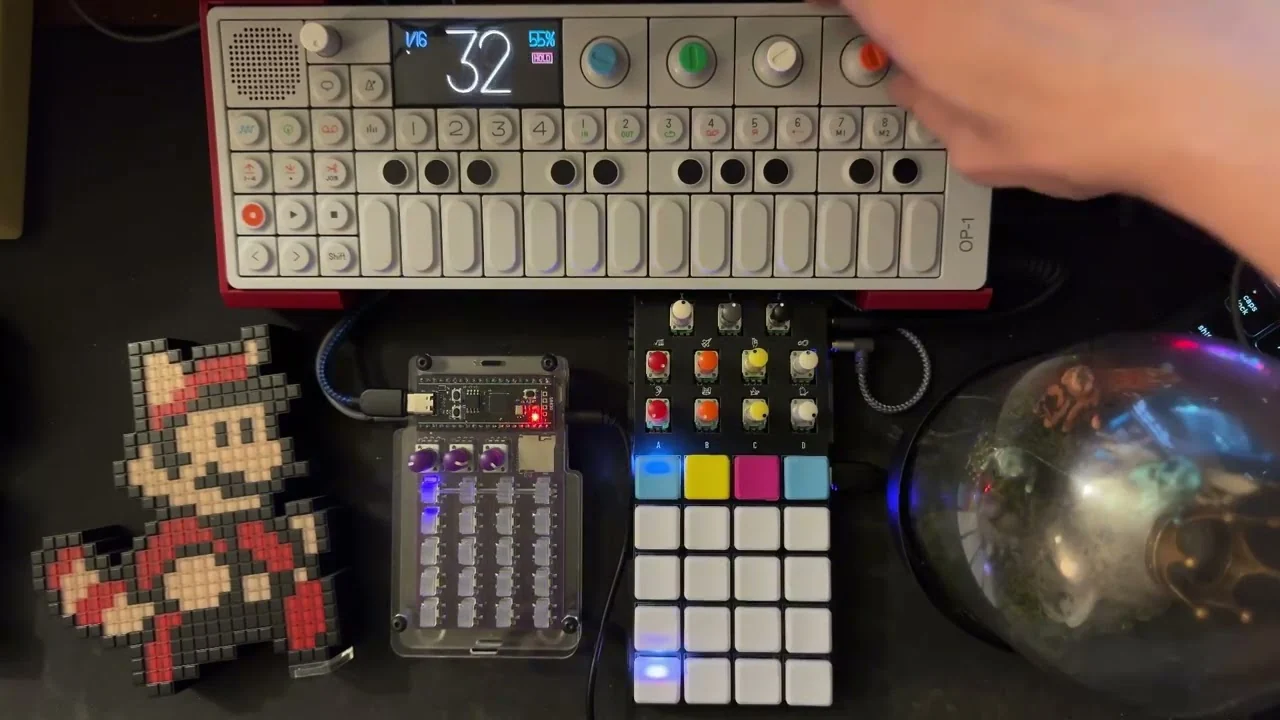
I am calling it a beta here because that is what it is. There is not yet a public build archive among the sources for this article.
okyeron has already made Zeptocontrol, a set of TouchOSC Mk2 and Max remote-control templates for Zeptocore and Zeptomech. It is funny to me that people have started making control software for the hardware before I have even finished it.
other software and possible ports
There are now several software projects living around the hardware:
- Zeptocontrol controls Zeptocore and Zeptomech from TouchOSC or Max.
- Zeptovideo uses Zeptocore MIDI to control video shaders.
- Sampo Sample Manager organizes and exports large sample collections.
There is also a detailed plan for porting _core to the Dadamachines TBD-16. The document compares the RP2350 hardware with Zeptocore and works through the display, controls, audio, MIDI, and especially the SD card. Continuous sample streaming is the difficult part, so most of the plan is concerned with SDIO speed and buffering.
This is not a finished port. I am including it because it is a useful engineering document and may become one, but currently it is a plan for how to do the work.
what I like about these
I made Zeptocore open-source because I want it to remain usable and changeable. These projects are a much better result than a folder of source code sitting untouched.
The Zeptoboard makes the circuit easy to experiment with. The homemade kits show both successful assembly and repair. Zeptocade and ZeptoMod make the interface much larger. SAMPO gives it another case and identity. The software projects handle sample libraries and remote control. The visualizer solves another problem I did not try to address in the original hardware.
If you want to start making your own, begin at zeptocore.com. The source and schematic are available separately. You can also begin with a finished Zeptocore or the DIY kit.
If you make a new one, please publish some pictures and notes. It does not need to be a perfect repository. A short record of what worked and what failed can save the next person a great deal of time. Include any changes you made.
Made by Infinite Digits
Shop this story


Build it yourself
zeptocore kit
A kit for building the open-source sampler yourself.