
Community
smol frens
Nyblcore was my first hardware device. These tiny synthesizers and DIY kits helped me figure out what a small instrument could be.
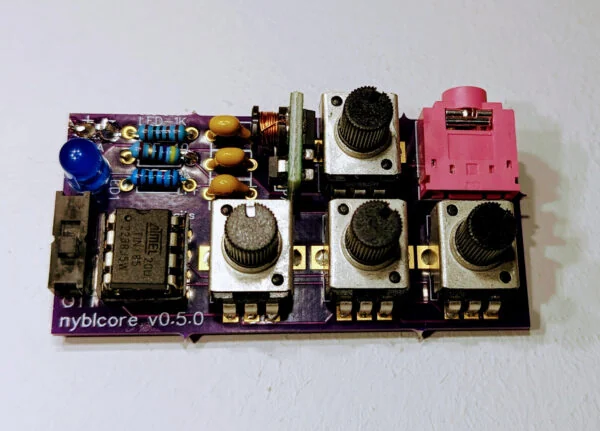
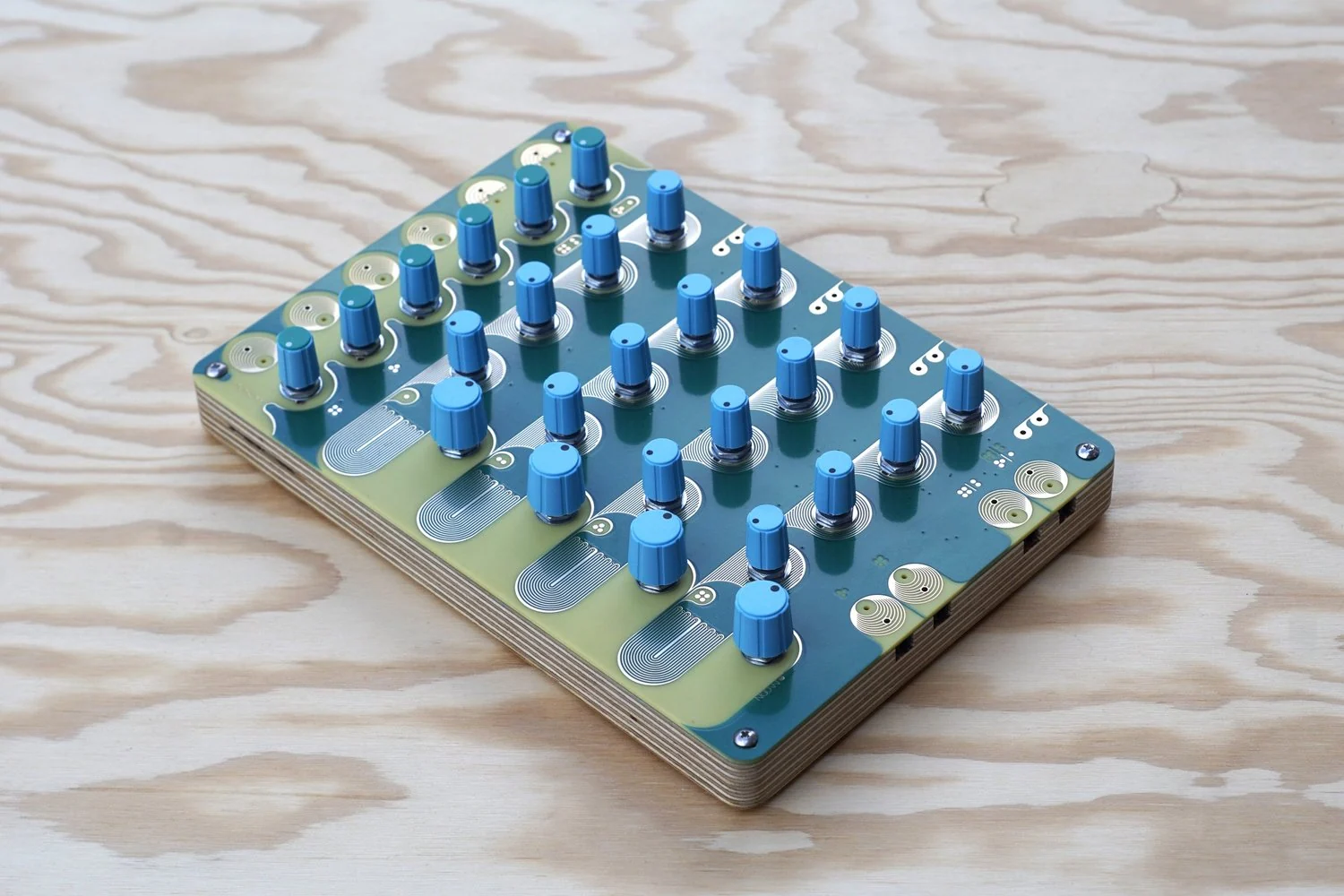
I made the nyblcore in 2023. It was the first hardware device I had made, and at the time I was looking at a lot of tiny synthesizers and DIY kits. I liked instruments where the circuit board was also the front panel. The controls often took up more space than the processor. Most of all, the maker had concentrated on one peculiar way of making sound instead of shrinking a normal synthesizer.
Nyblcore used an ATtiny85 and held 8 kB of audio. One AAA battery powered it. The entire sample memory was about 1.2 seconds at 4.2 kHz, which is not much audio by any reasonable measure. The tempo and volume shared three knobs with every sound control. Turning them could add distortion or change how the sample jumped, retriggered, stuttered, and stretched. Loading a new sound required programming the chip. It was small partly because I wanted it to be small, and partly because I was learning how to make hardware and did not yet know how to make something much more complicated.
I started keeping a list of other little music devices around the same time. I still add to it whenever I find something new on a maker's website, Etsy, Tindie, Reddit, or an old forum thread. Some of the instruments are polished products and some are kits. Some are available all the time, while others appear in a batch and then disappear until the maker has time to build more. This is my current list of smol frens.
small computers for making music
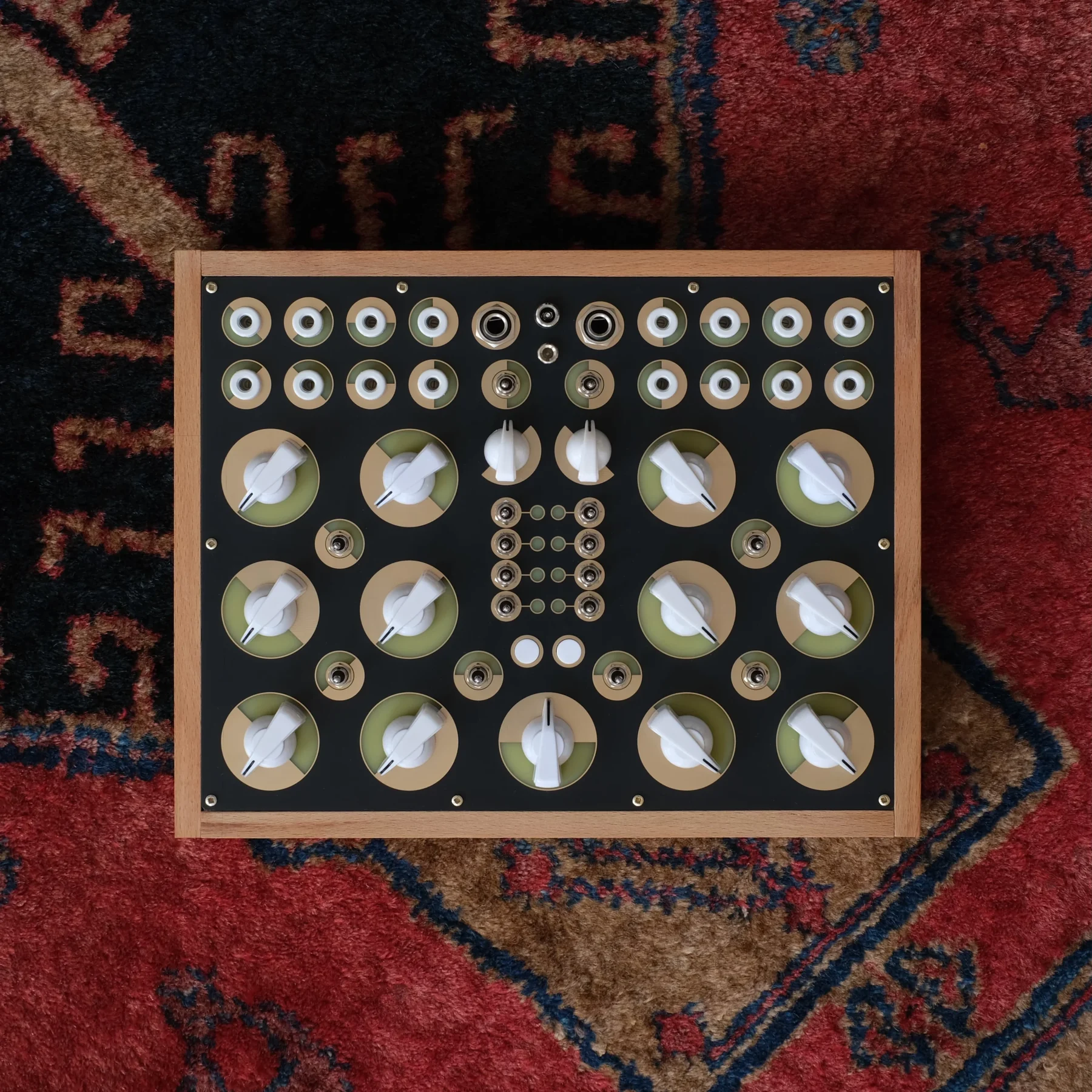
The Prismatic Spray II by Distropolis Goods is a stereo bytebeat synthesizer with two independent engines. It has more than sixty equations, presets, MIDI, a filter, and a browser visualization. Bytebeat sound can begin with a short mathematical expression, but Prismatic Spray gives those expressions a proper physical interface with enough knobs that it is possible to explore them without thinking very much about the math. I also really like the colors.
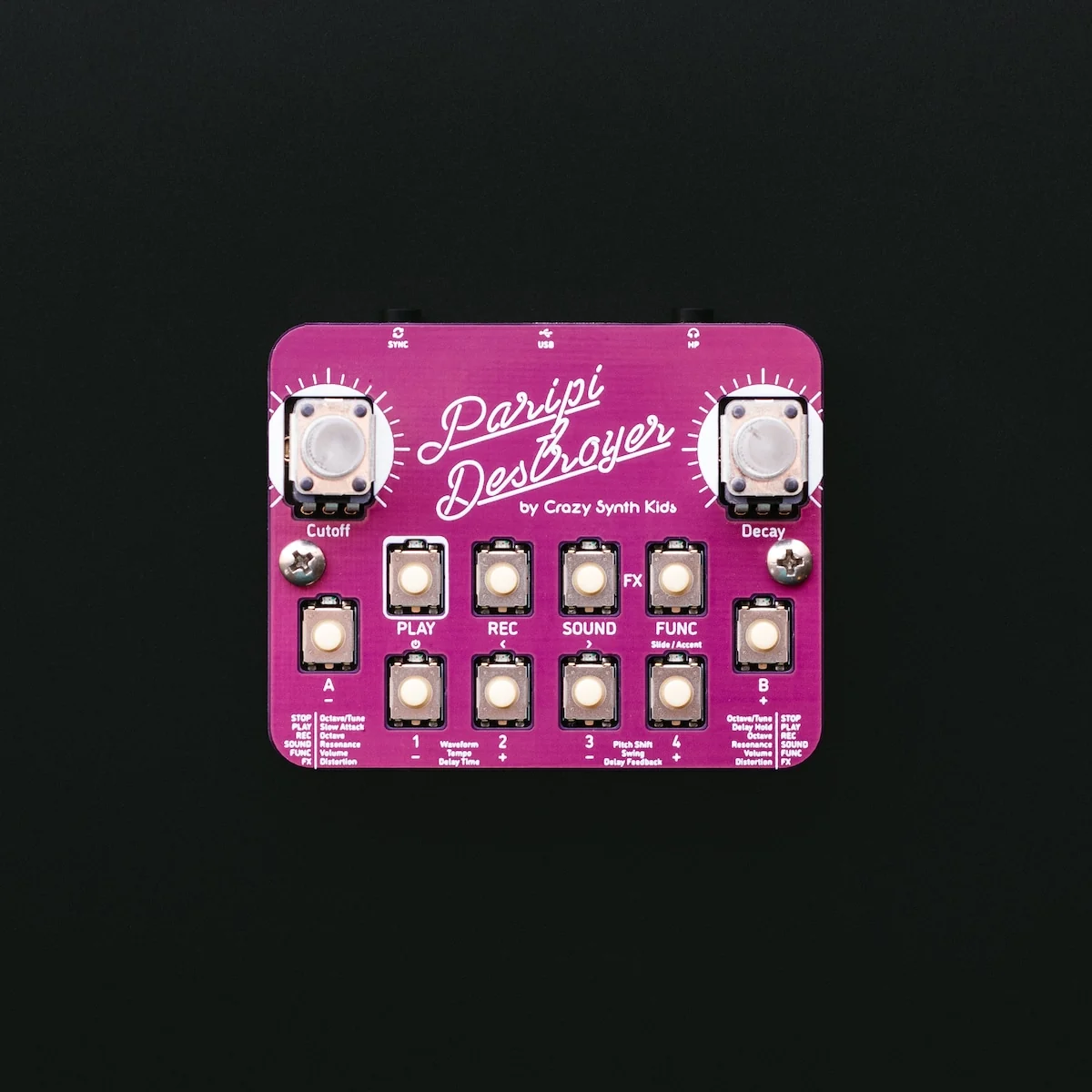
ParipiDestroyer by SYNTHERNET is one of the smallest complete acid machines I have seen. It has a virtual analog voice, distortion, delay, a sixteen-step sequencer, four patterns, slide, accent, sync, and a little keyboard made from a handful of buttons. It can run from one AAA battery. The project started as a prototype in 2017 and later produced hundreds of units through crowdfunding, though these days it tends to appear in small batches and sell out.
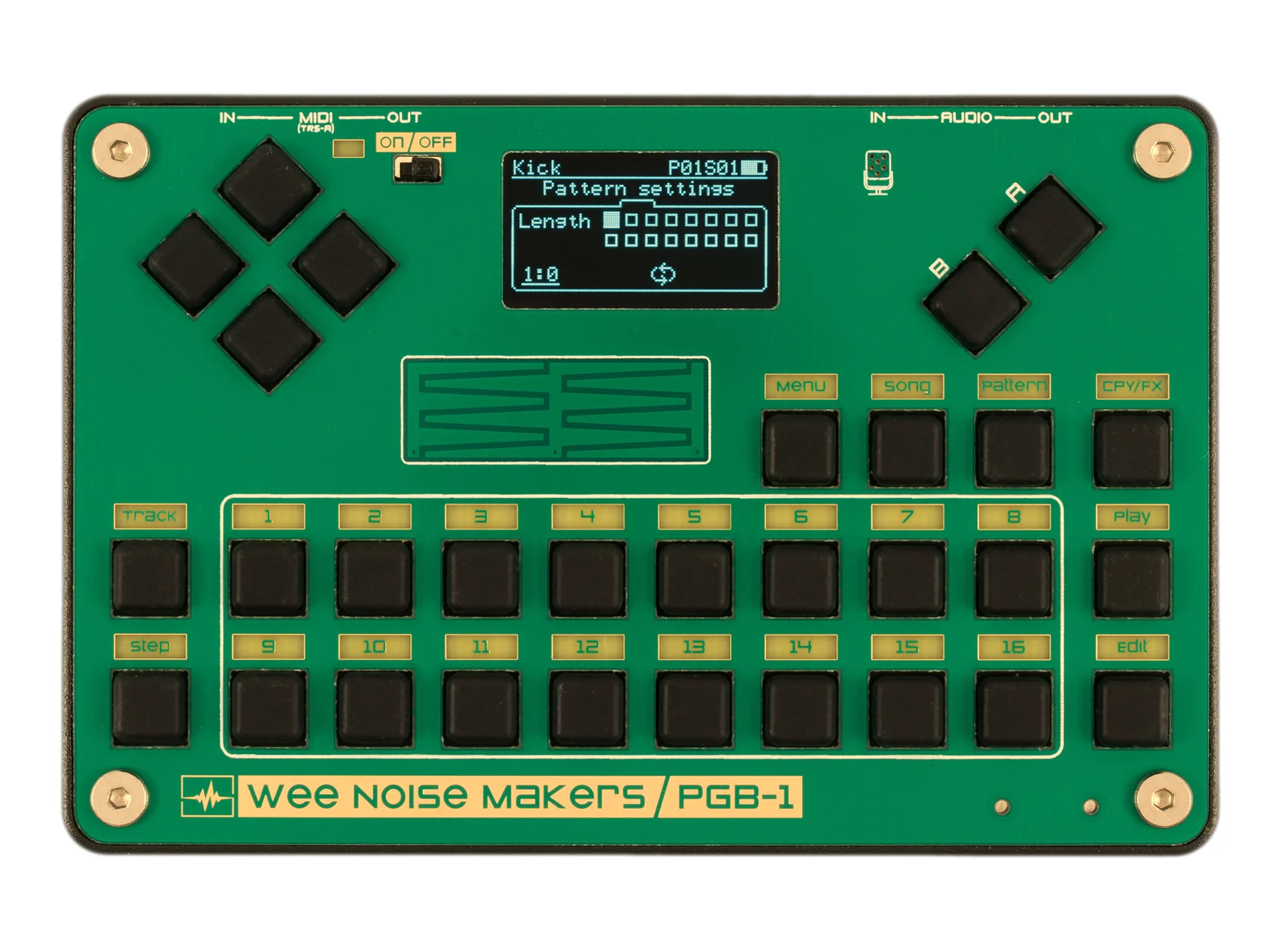
The PGB-1 by Wee Noise Makers is also pocket-sized, but it fits six digital synthesis tracks, two sample tracks, direct sampling, parameter locks, conditional triggers, effects, and a song mode into the space. It is open-source and rechargeable. The sequencer is capable enough to finish music instead of only beginning an idea. I have a lot of appreciation for an instrument that remains open even after becoming a finished product.
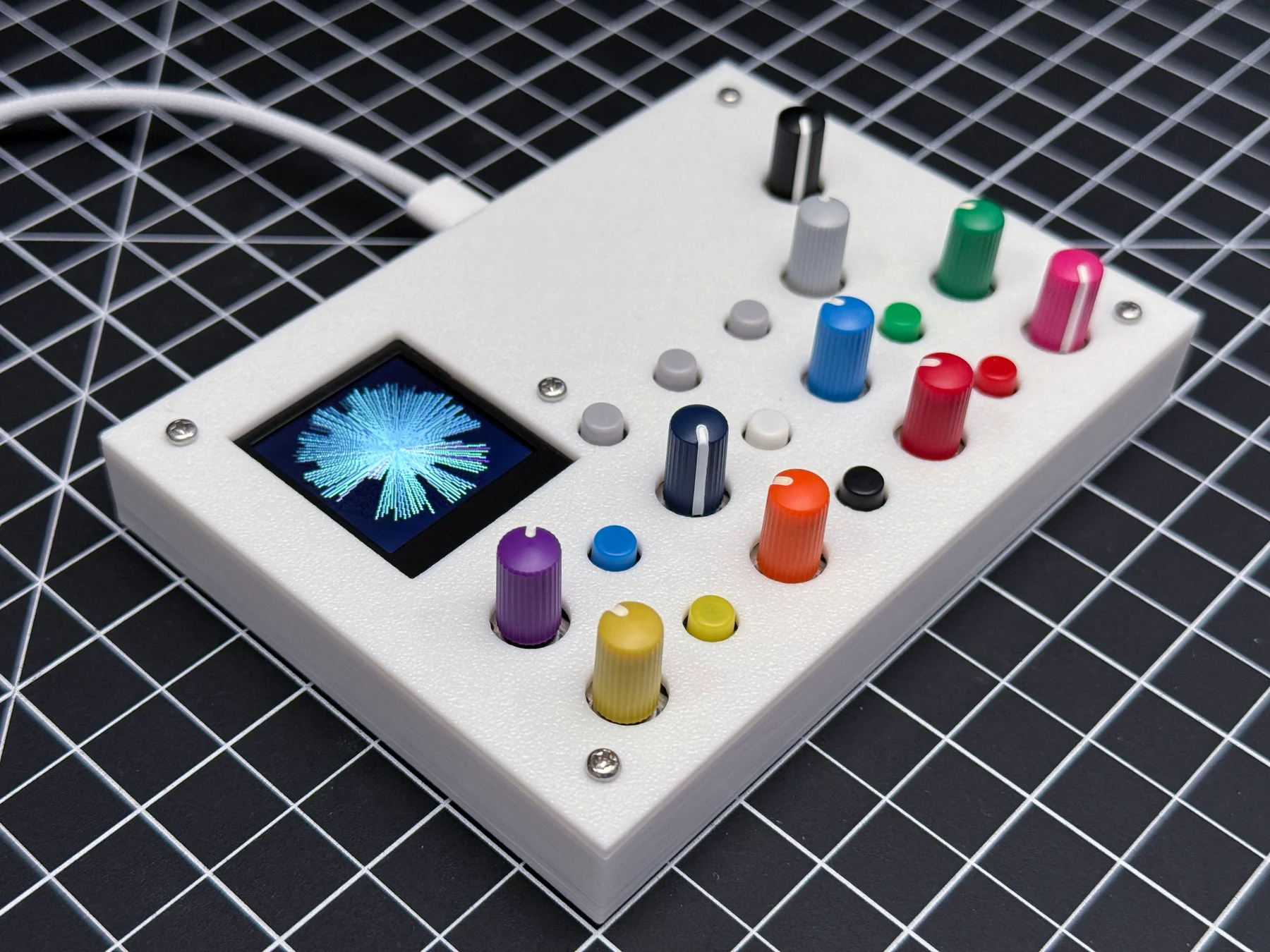
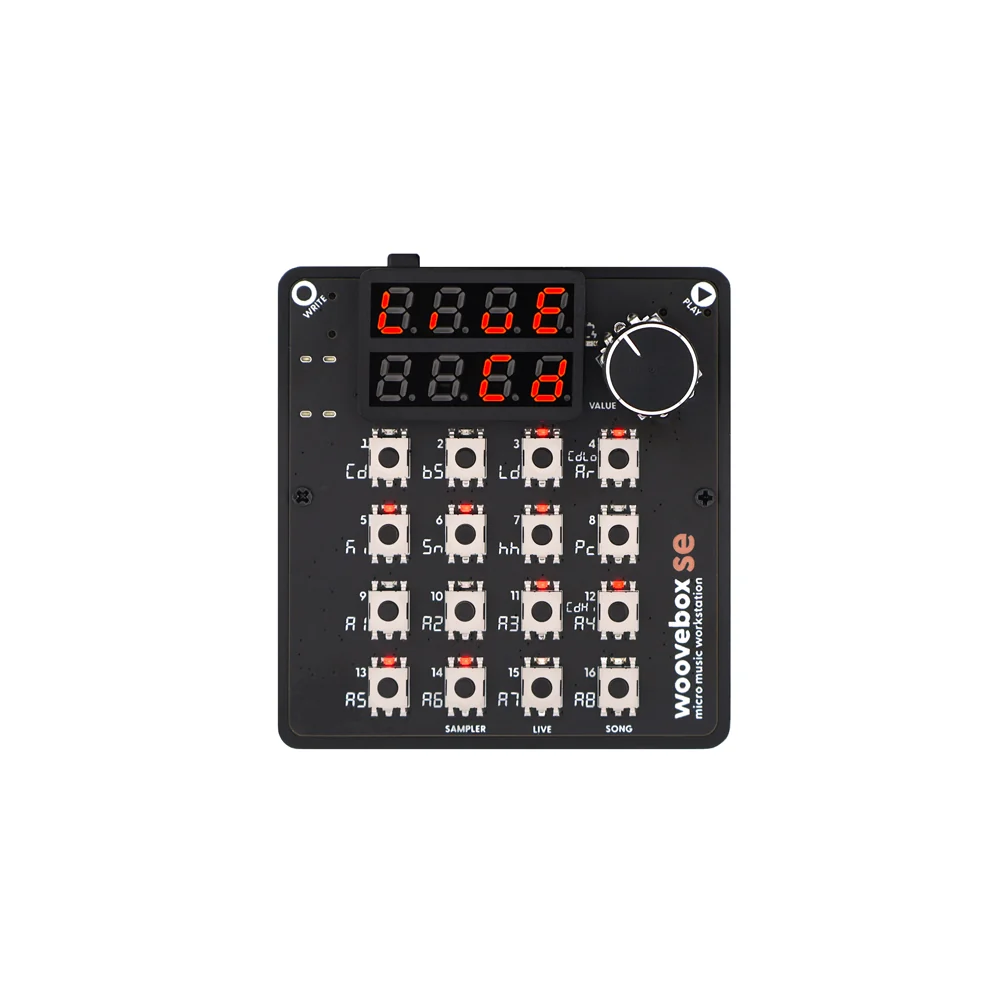
The Woovebox is a synthesizer, sampler, sequencer, and complete music workstation that weighs about 68 grams. It is made as a long-running personal project and the software continues to change as its maker thinks of new things it should do. There is a lot inside it, and it takes some time to learn, but I find the dedication to fitting a real music-making workflow into such a small object very inspiring.
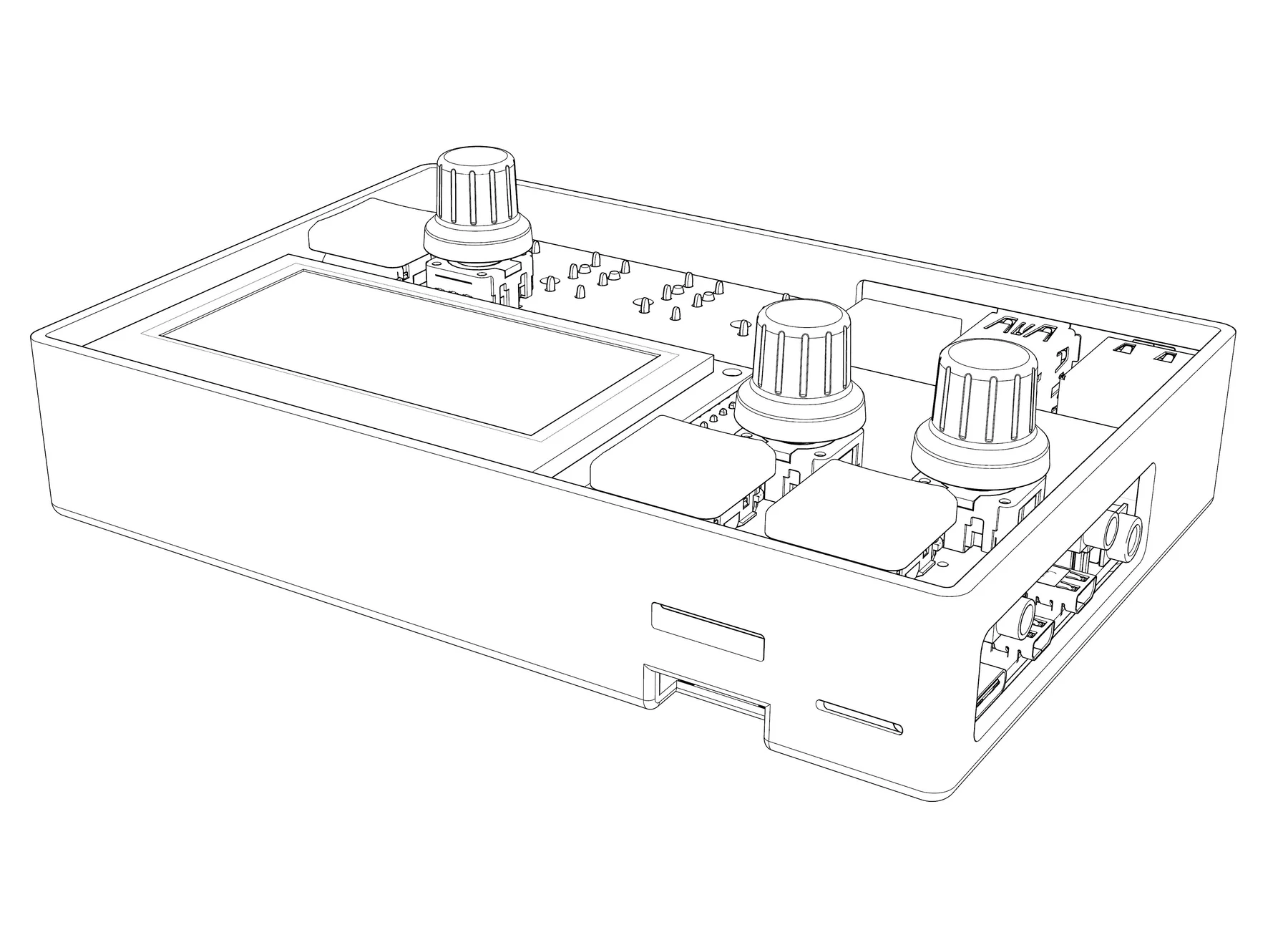
The shieldXL by Denki Oto is a DIY version of the open-source Norns sound computer. It combines a Raspberry Pi with a screen, encoders, stereo line input and output, and MIDI. I have written a lot of Norns scripts, so I like the idea that this fairly simple piece of hardware can become hundreds of instruments depending on which script is running. It is also a good example of a kit that does not end when the soldering is finished, since there is an entire community of software to explore afterward.
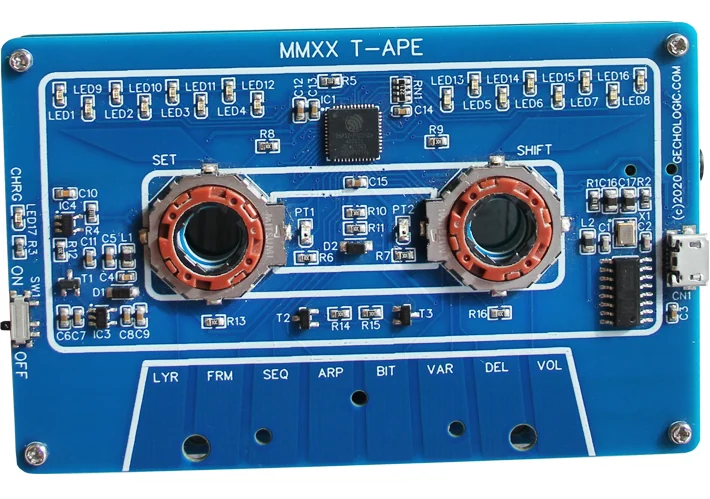
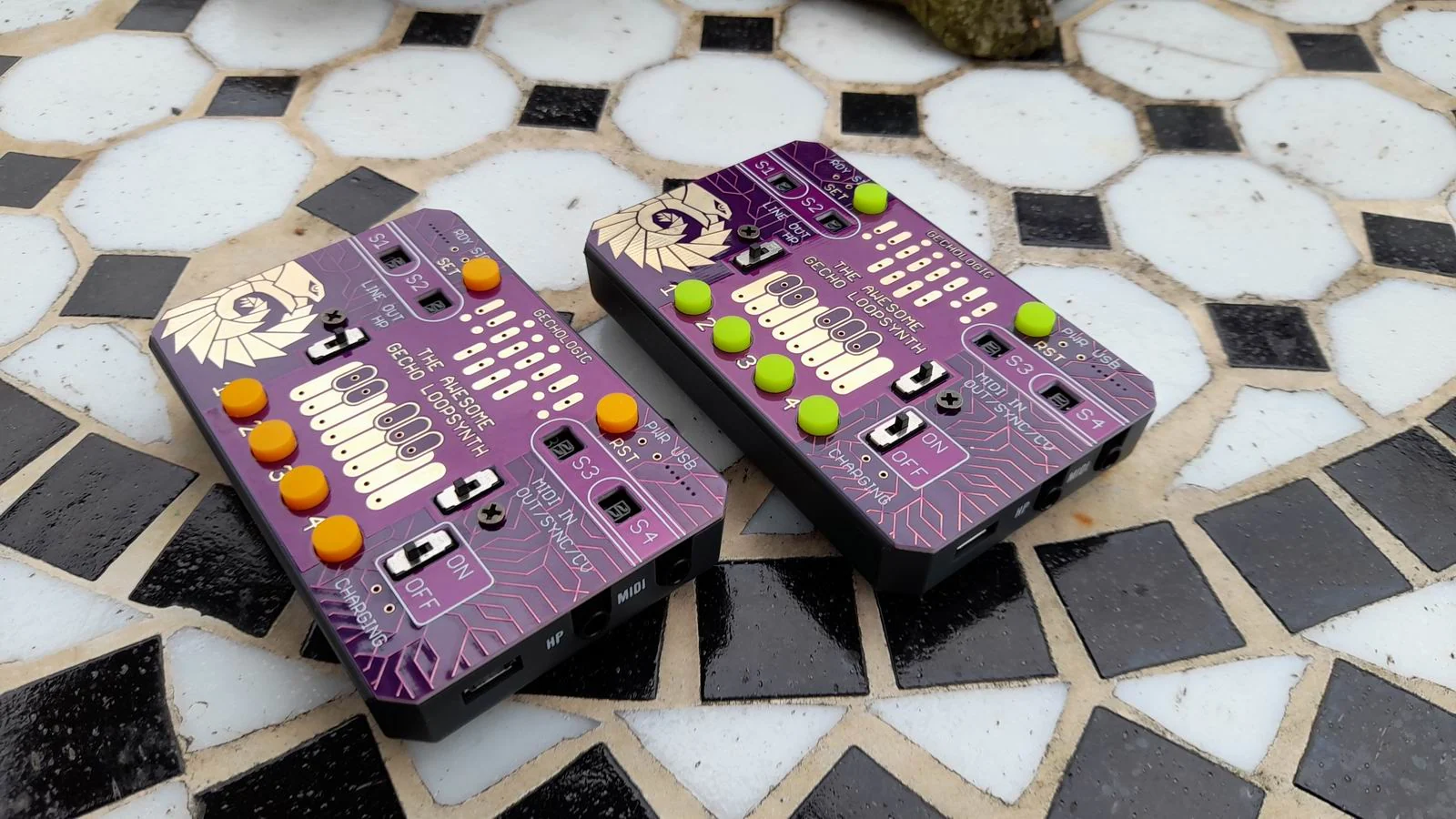
The MMXX T-APE by PhonicBloom combines bytebeat, granular-like textures, touch keys, light sensors, sequencing, delay, and a wavetable layer. It is difficult to describe as one type of synthesizer, but the controls make sense when it is in front of you: two large red-ringed controls, eight touch keys, and a row of functions for changing how the generated sound moves. PhonicBloom also makes the Gecho Loopsynth, which can be a polyphonic synthesizer, looper, sampler, effect, and environmental listening instrument. Its microphones and sensors let sounds in the room become part of what it does.
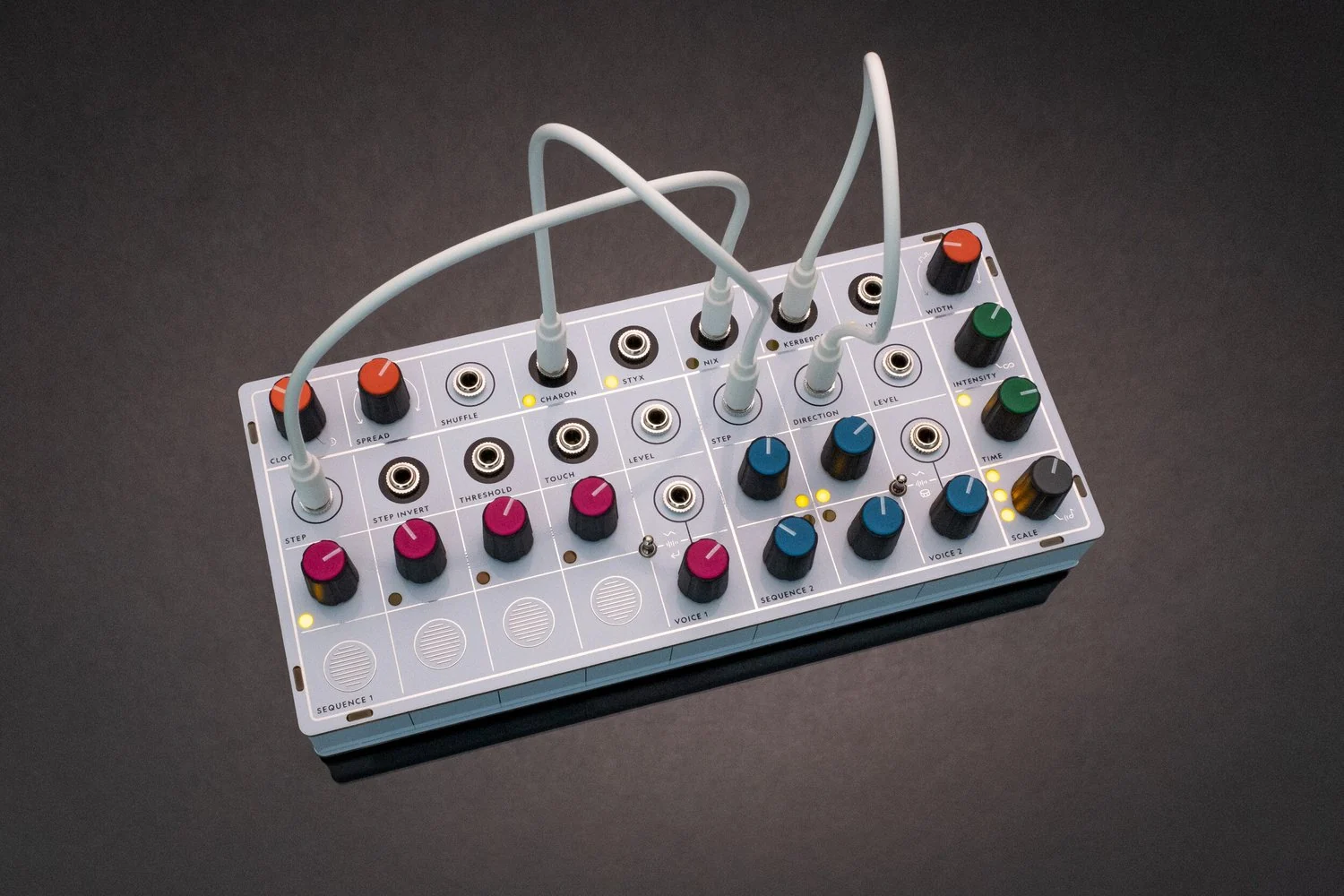
Pluto by Modern Sounds has two voices, two sequencers, a small touch keyboard, five modulation channels, MIDI, CV, audio input, delay, and reverb. There are no menus. I like small instruments with enough controls that I can understand what is happening by looking at them, and Pluto manages that without making the front panel feel crowded.
small rhythm machines
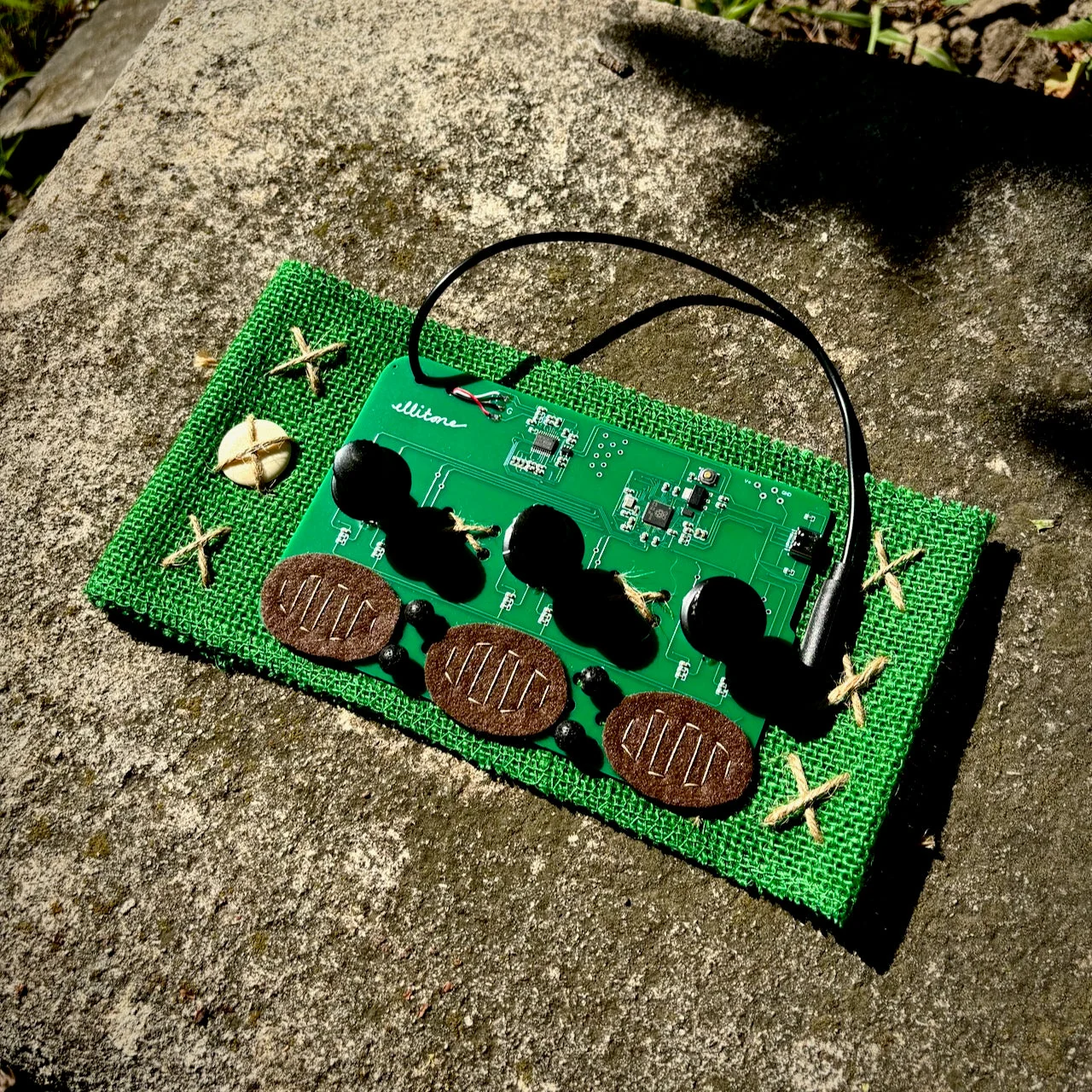
The groov-e by Ellitone generates three layers at once: drums, an atmosphere sample, and a four-voice polyphonic synthesizer. A probability system makes decisions inside each layer, so it continually produces related grooves instead of returning to one perfectly repeated bar. It is a nice way to make music with a machine without having to enter every note first.
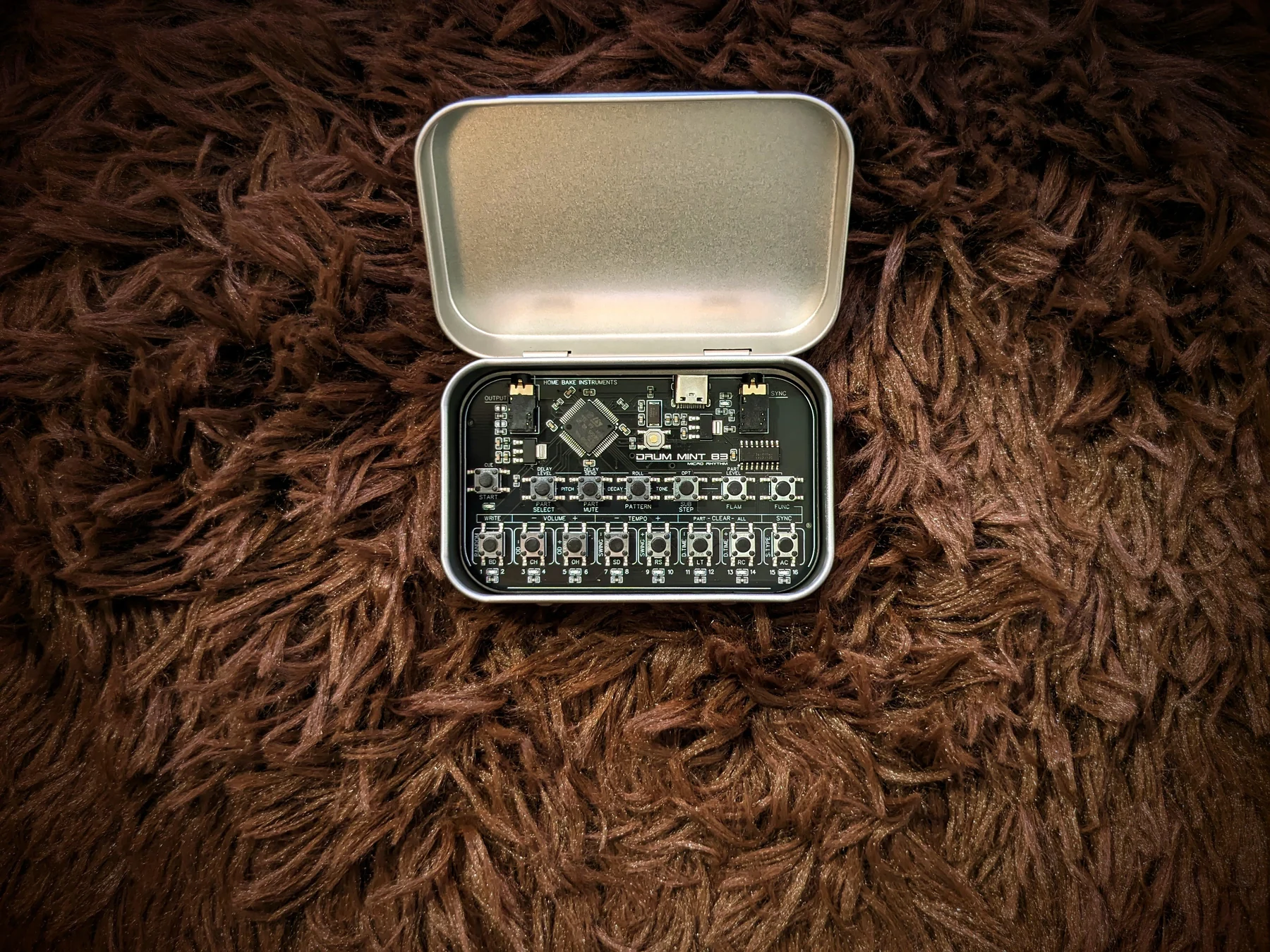
HOME BAKE INSTRUMENTS has made enough miniature devices to fill a small pantry. DRUM MINT 83 fits seven rhythm parts, sixteen steps, pattern chaining, swing, flam, overdrive, phrase generation, and stereo delay into a board that fits inside a mint tin. BREAK MINT does something similar with breakbeats, and there are also ACID MINT, FM MINT, GROOVES, and several other variations. I like seeing the same physical restriction used repeatedly because each version has to decide which controls and musical ideas deserve the limited space.
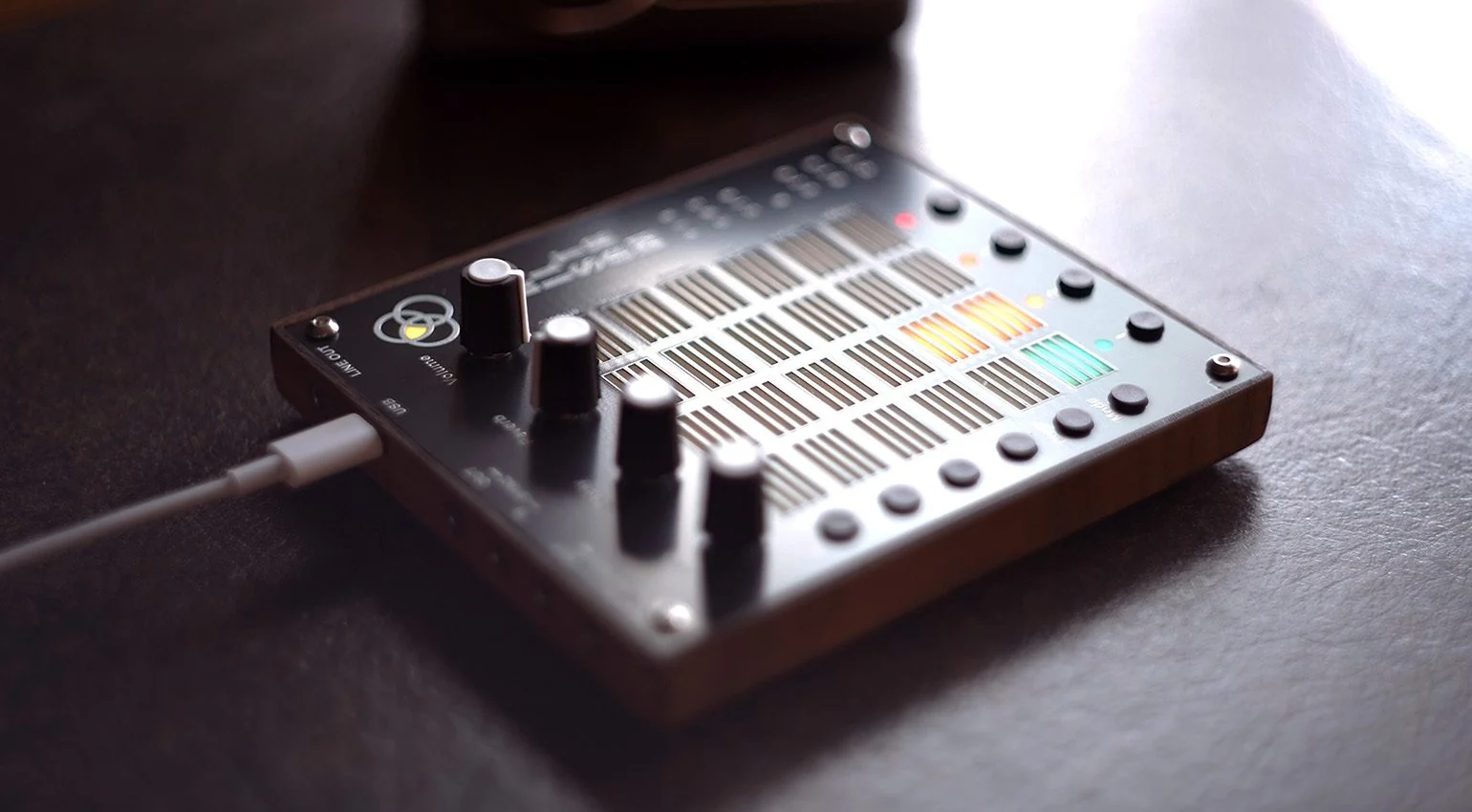
Hailstorm by Rainy Day Electronic Instruments combines a four-voice drum synthesizer with four sample voices. Its touch strips program triggers and record changes to level, pitch, decay, shuffle, and effects. It also has dedicated mute buttons, MIDI, analog clock, and pattern chaining. The interface was clearly designed around moving fingers over the touch strips rather than around reproducing the grid and screen of a larger groovebox, and it makes the instrument feel quite different as a result.
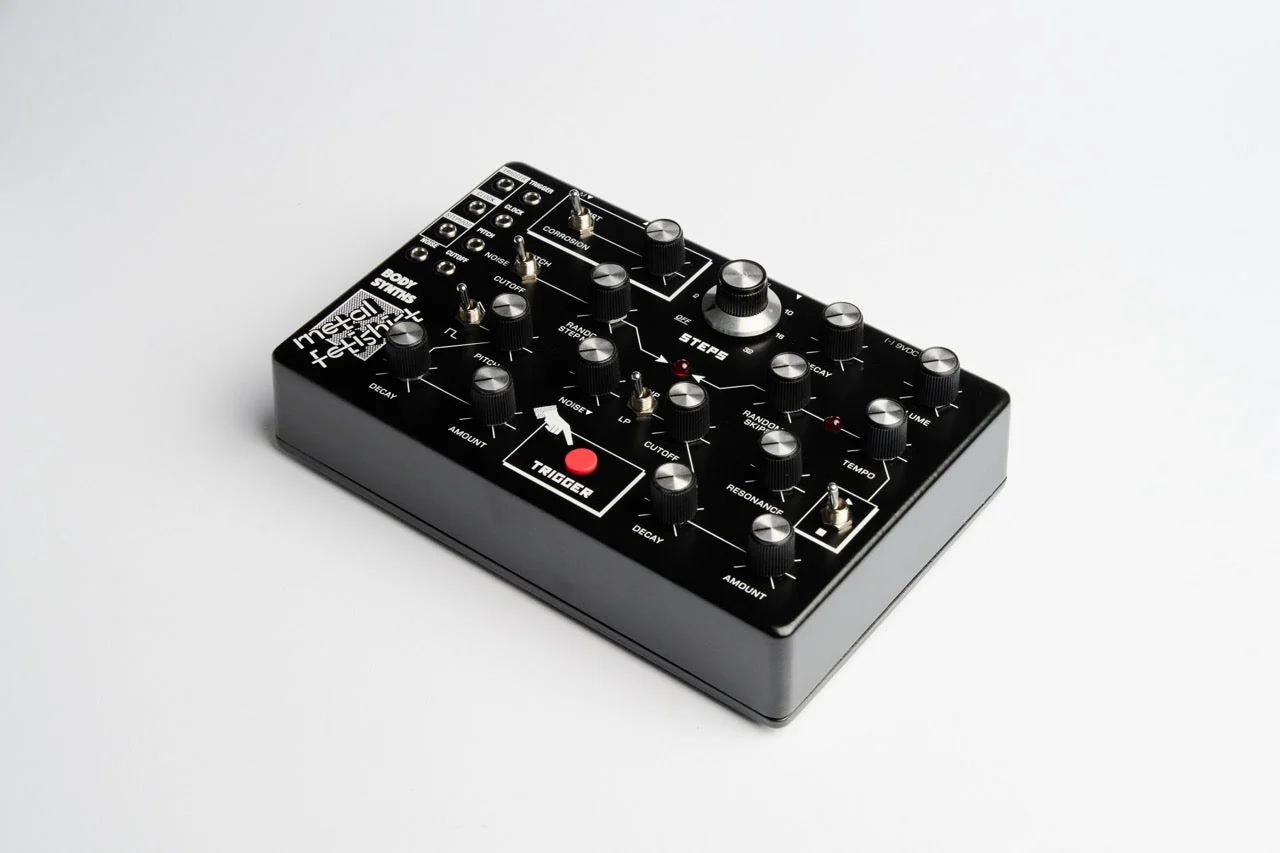
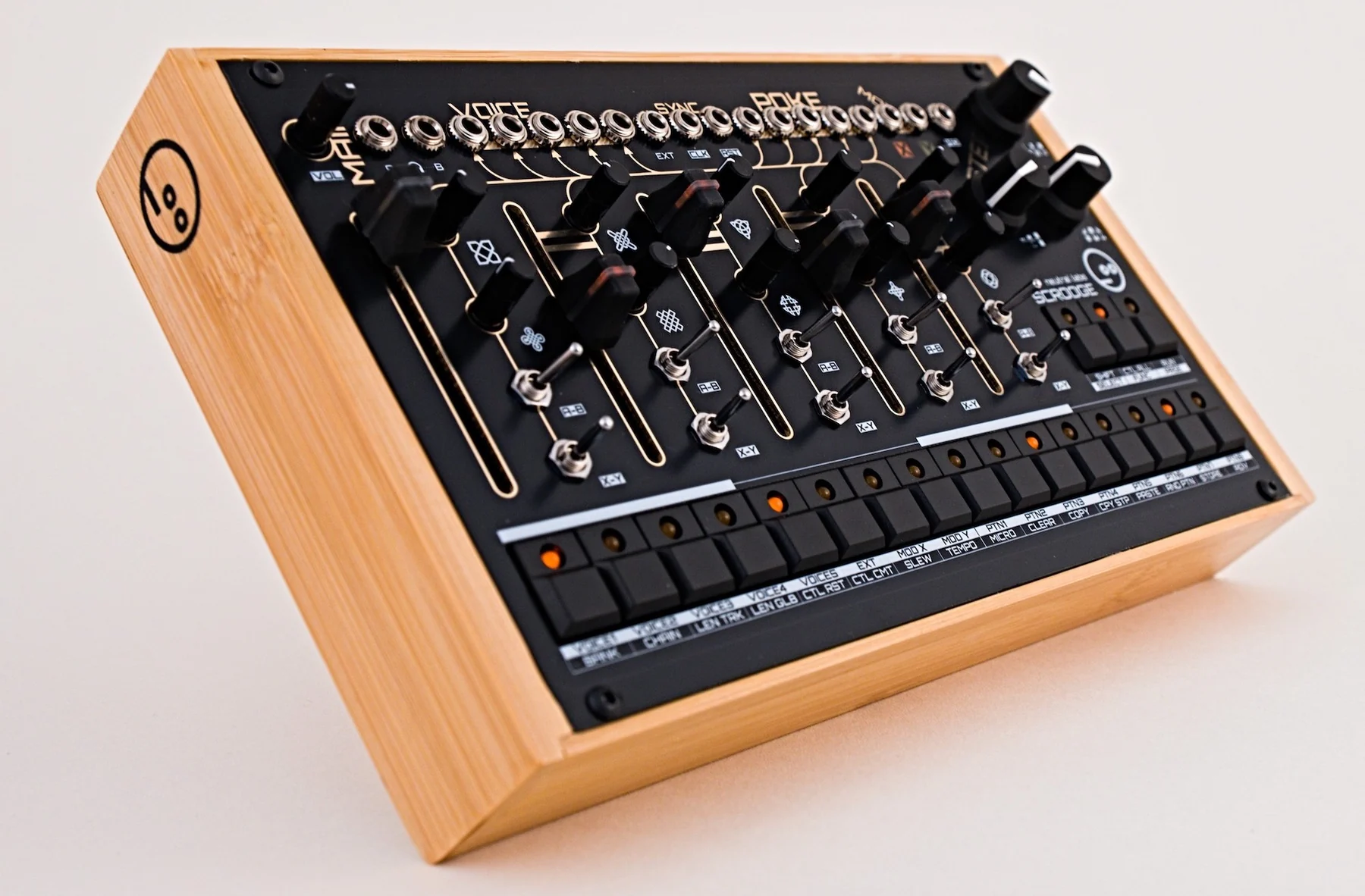
The Metal Fetishist by Body Synths is a percussion synthesizer based around looped random sequencing and lots of distortion. It can make kicks, noise, drones, glitches, and microtonal melodies, and it can also process external audio. I am attracted to rhythm machines where the interesting part is finding the rhythm rather than programming one that I already know, which is also what I like about Scrooge by Neutral Labs. Scrooge has five analog voices powered by their incoming trigger signals, parameter locks, and generative patterns. Neutral Labs describes it as a sequenced malfunction generator, which is a useful description of both the circuit and the intended way to play it.
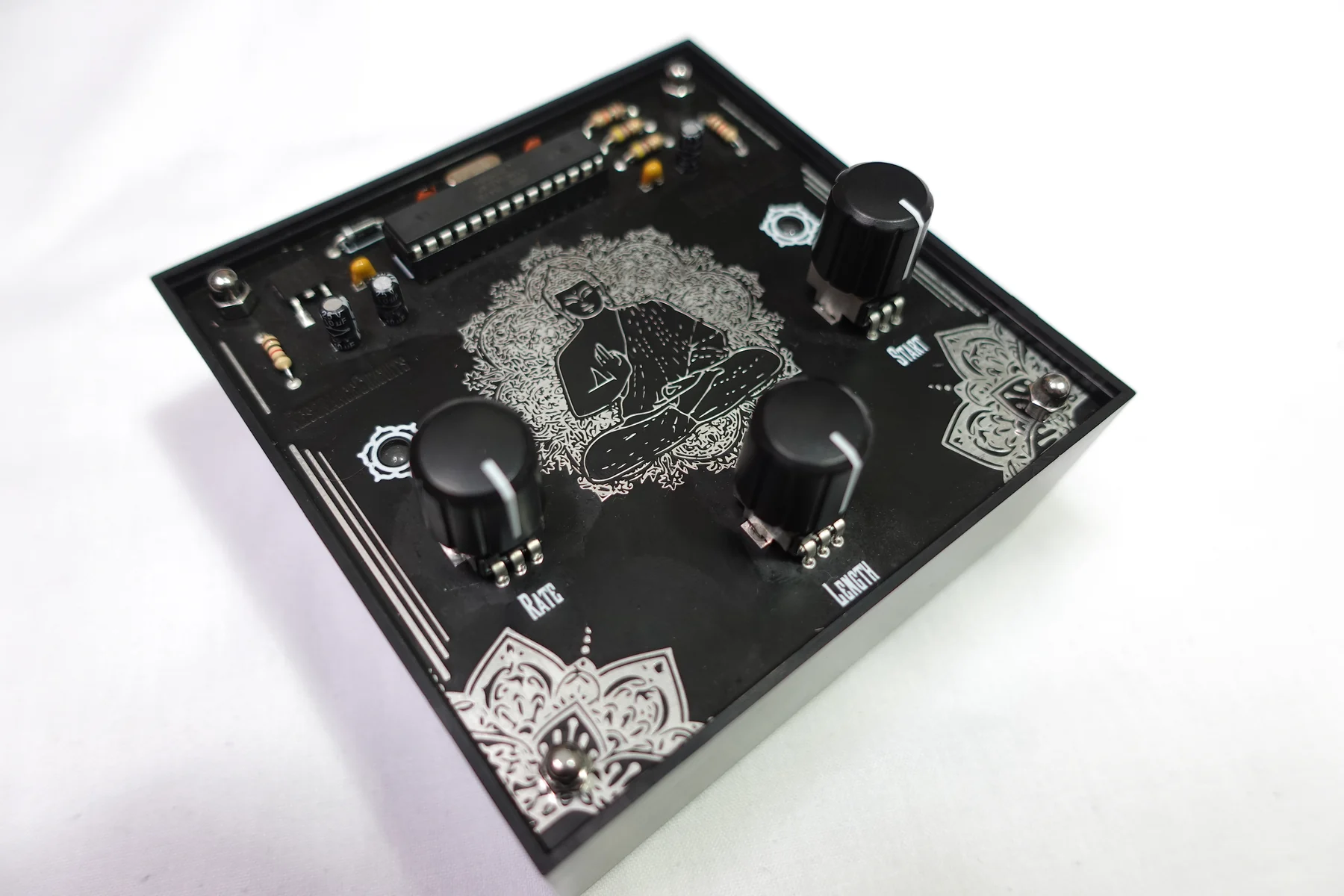
The Mystic Drums from Resonance Circuits is a ten-centimeter loop instrument that can move among percussion, glitchy sequences, and drones. There are only a few controls for the beginning, length, and speed of its loops. A box like this is useful when I want a rhythm that I would not have thought to write in a normal step sequencer, especially after running it through some delay or reverb.
drones and other noisy boxes
The DRONE from digdugDIY has four interacting analog oscillators, each with pitch and volume, and a master control that starves the circuit of voltage. As the available power changes, the oscillators affect one another and the whole thing can begin producing rhythms along with the drone. digdugDIY has been making pedals, noise boxes, altered samplers, and other handmade audio devices for years, usually in small batches and often with hand-painted enclosures. The Etsy shop describes itself as an art and music label operating on an abandoned spaceship, which is consistent with the devices.
The OVUM by Crows Electromusic has five independent analog oscillators with direct controls for volume, pitch, and tone. There is no screen or quantization. There is no secondary button layer to learn either. Five oscillators is a simple idea, but they can produce complicated beating patterns and microtonal clusters when their pitches are close together. The wooden enclosure also makes it feel more like a small instrument than a test circuit, though the underlying interaction is nearly as immediate as plugging oscillators into a breadboard.
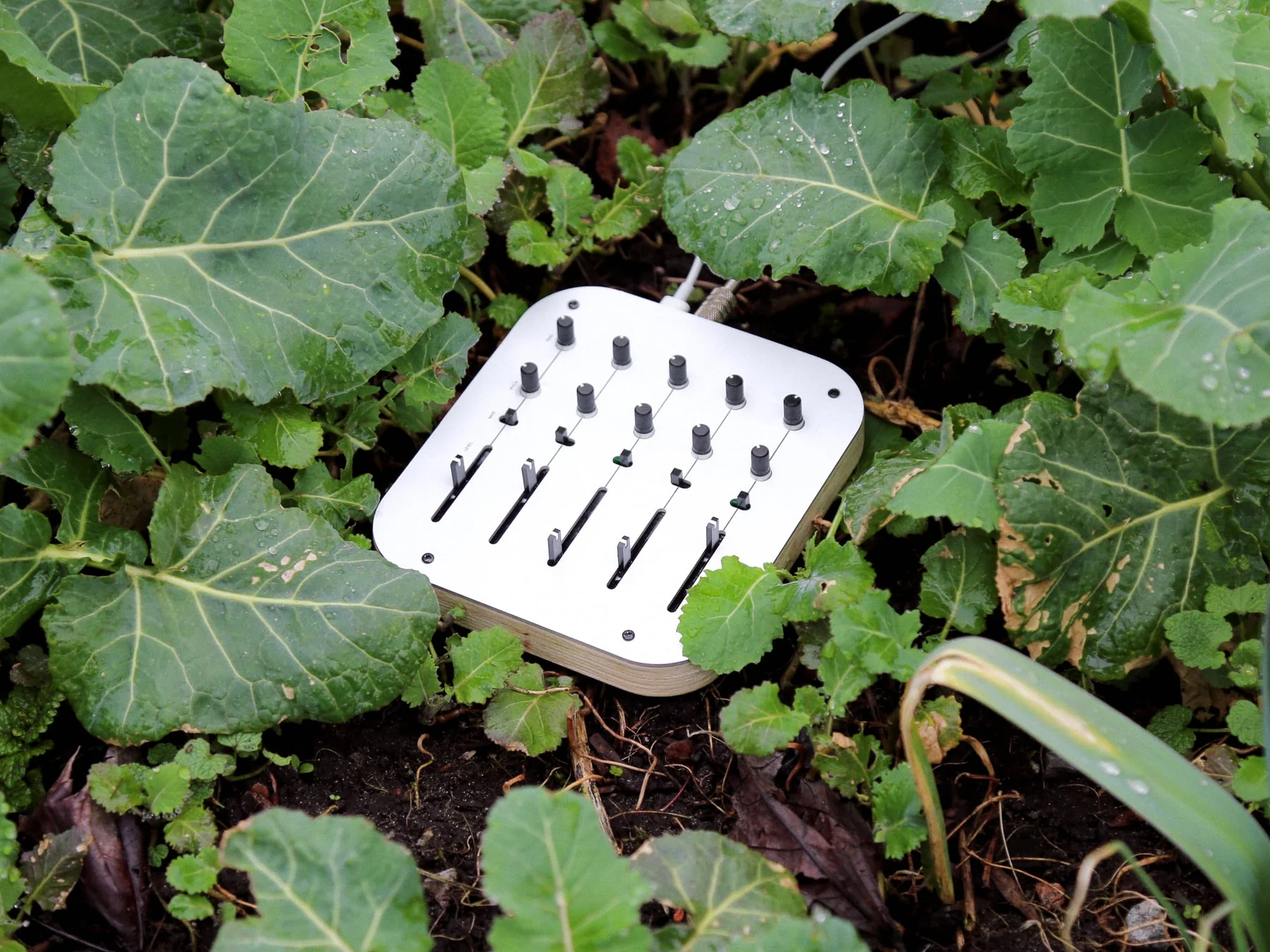
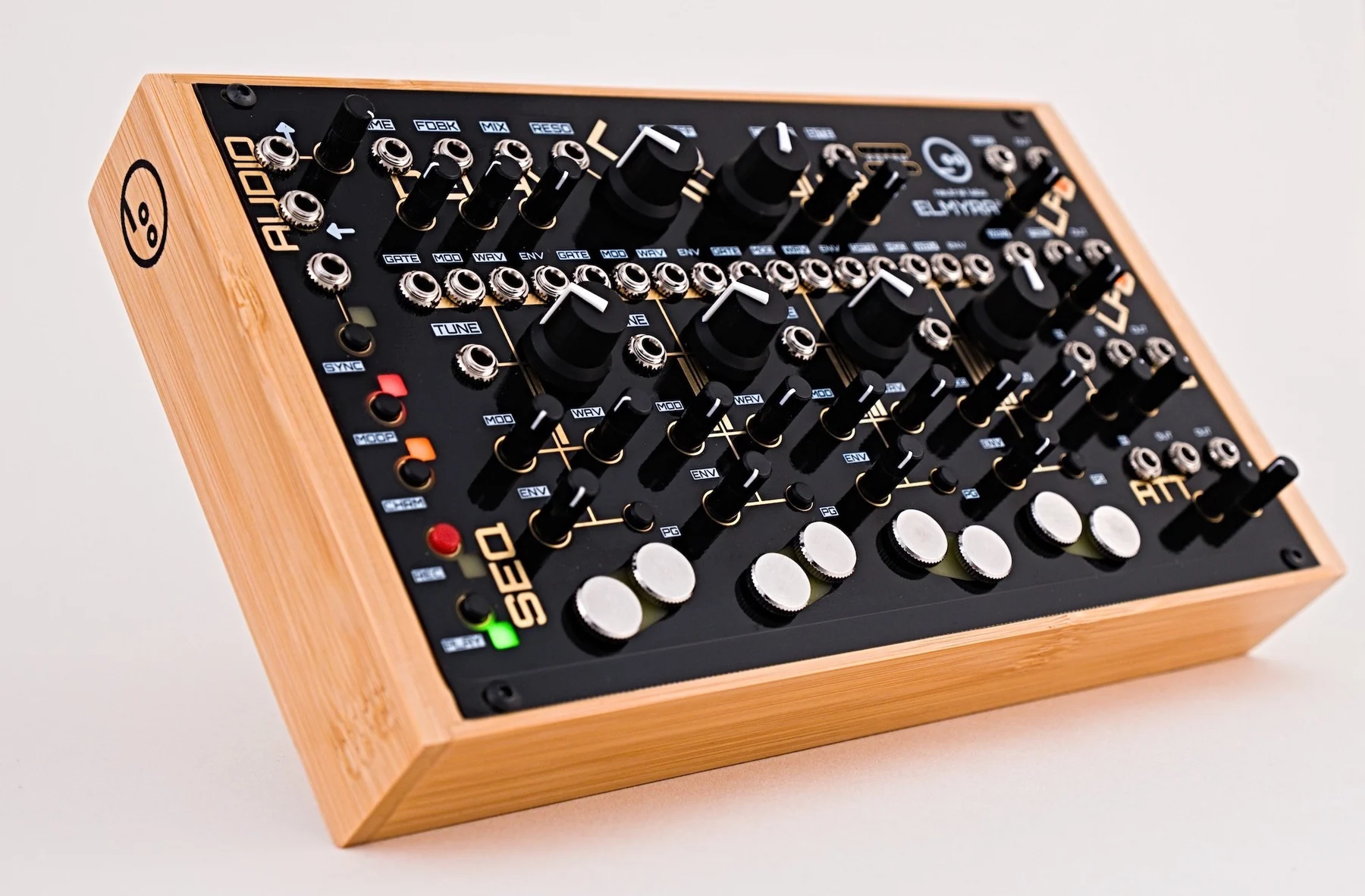
Elmyra 2 is a four-voice digital and analog drone instrument with polymetric sequencing, patch points, a filter, delay, and touch controls. It also has modifier slots where ordinary electronic components can change the circuit. I especially like this part because a capacitor or diode becomes a control that can be swapped and compared by ear. It preserves some of the experience of experimenting on a workbench inside a finished device.
The Double Knot by Lorre-Mill has two analog voices connected to two shift-register sequencers. It can make melodies, percussion, noise, and patterns that feed back into one another. It is not particularly easy to tell it what notes to play, but it is very good at giving you something related to what it was just doing, which is often more interesting. The wooden case and banana cables also make the whole process pleasant to look at while it unfolds.
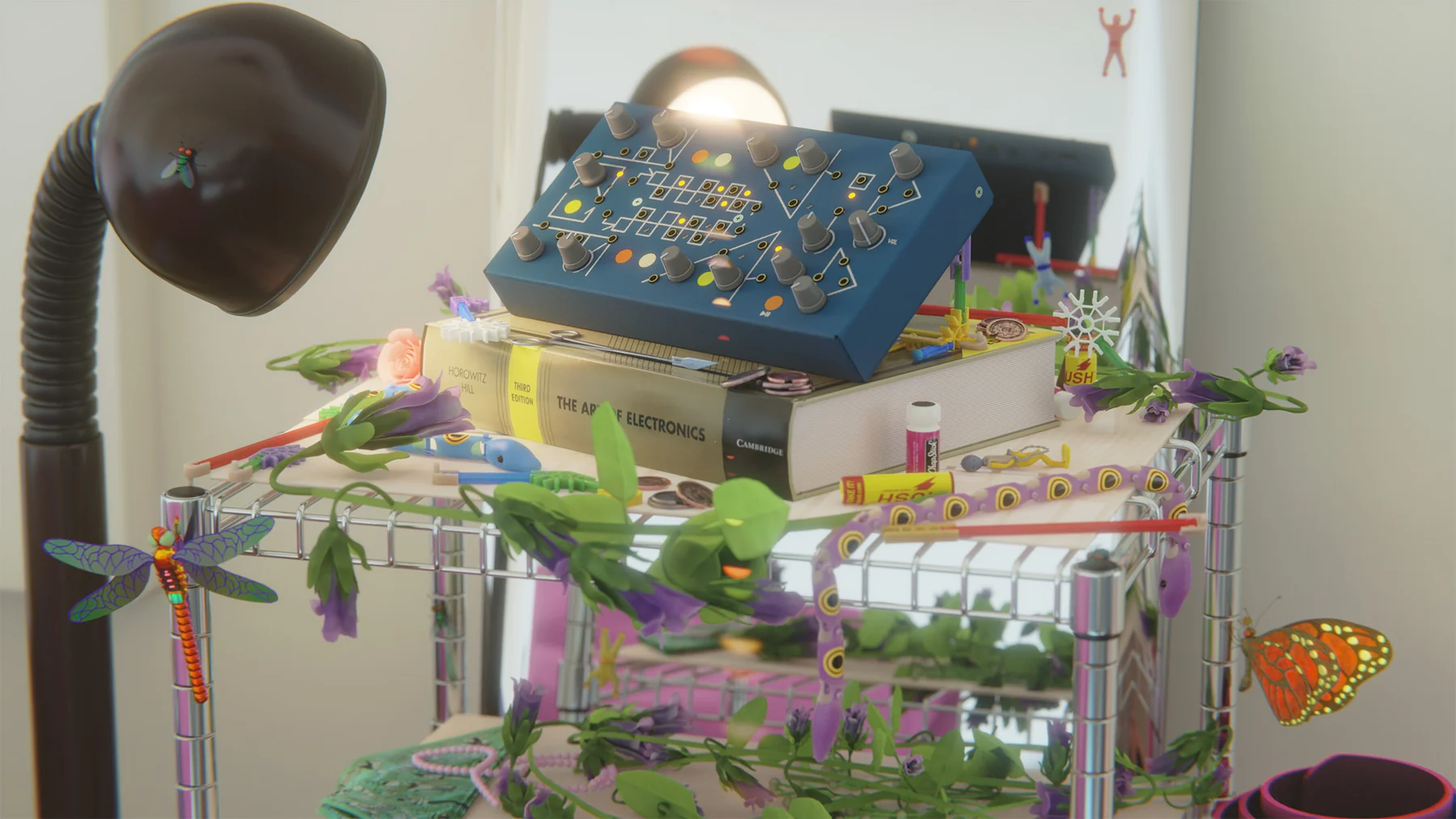
MOON by Landscape is a four-channel passive analog drum synthesizer with no normal power supply. Incoming gates and control voltages provide the energy that makes each voice sound, so the shape and strength of the trigger affects the sound instead of only telling it when to begin. This is a clever circuit idea, but it also leads directly to the way the instrument is played. The source of power becomes another musical parameter.
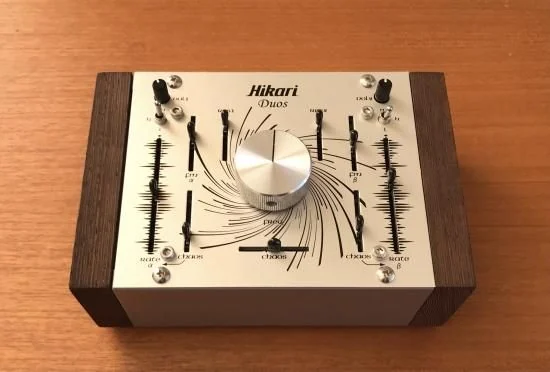
The Duos by Hikari Instruments is a stereo chaos synthesizer made from shift registers, feedback, filters, and low-pass gates. It produces pulses, noise, drones, and stereo movement, with a large central control that changes how the two sides interact. The Röntgen by Tilde Instruments is somewhat larger, but I keep it on the same list because it has a similarly complete idea: two analog oscillators, waveshapers, random shift-register sequencers, banana patching, and stereo delay arranged as one improvisational instrument.
what I learned from making one
Nyblcore was less capable than nearly every instrument above. It had very little memory and no removable storage. There was no external synchronization either. The tempo could wander and changing the audio took some effort. These were partly intentional restrictions and partly the result of building around an ATtiny85, but they taught me that a small device could still feel complete if the controls had an understandable relationship to the sound.
The things I learned while making it continued into Pikocore and Zeptocore. Pikocore uses an RP2040, has much more sample memory, eight buttons, four knobs, synchronized effects, sequencing, clock input and output, and now a browser sample manager. Zeptocore moved the samples to an SD card and added twenty buttons, more effects, MIDI, and a deeper performance interface. They are much more capable, though I have tried to keep the part I liked about nyblcore. The circuit board stays visible and the controls act as the enclosure. It should be possible to pick the device up and begin changing the sound without much preparation.
I keep this list because it is easy to forget how many instruments begin with one person making a board at home. A small maker can try an interface or a circuit that would be difficult to justify as a mass-market product, and the result can remain useful precisely because it does not need to satisfy every kind of musician. I am certain there are more of these sitting on desks or buried in old forum posts. There must be shops I have not found yet too. If you make one, please send me a link and I will happily add another fren to the list.
Made by Infinite Digits
Shop this story

The first smol fren
nyblcore kit
An open-source ATtiny85 lo-fi sampler and DIY kit with 8 kB of sample memory.

The pocket sample mangler
pikocore
Eight buttons, four knobs, synchronized effects, and a browser sample manager.

Small device, large samples
zeptocore
A tactile handheld sampler with twenty buttons, SD storage, effects, and MIDI.